

Most companies don’t have a lead problem. They have a pipeline quality problem.
There’s no shortage of contacts. You can pull thousands of leads in a few clicks. The issue is knowing who actually matters right now and reaching them in a way that gets a reply.
That’s where lead generation agencies come in. Not the old-school list vendors. The new ones that actually build systems.
This guide breaks down the best B2B lead generation agencies right now, how they work, and how to choose one without wasting six months on the wrong partner.
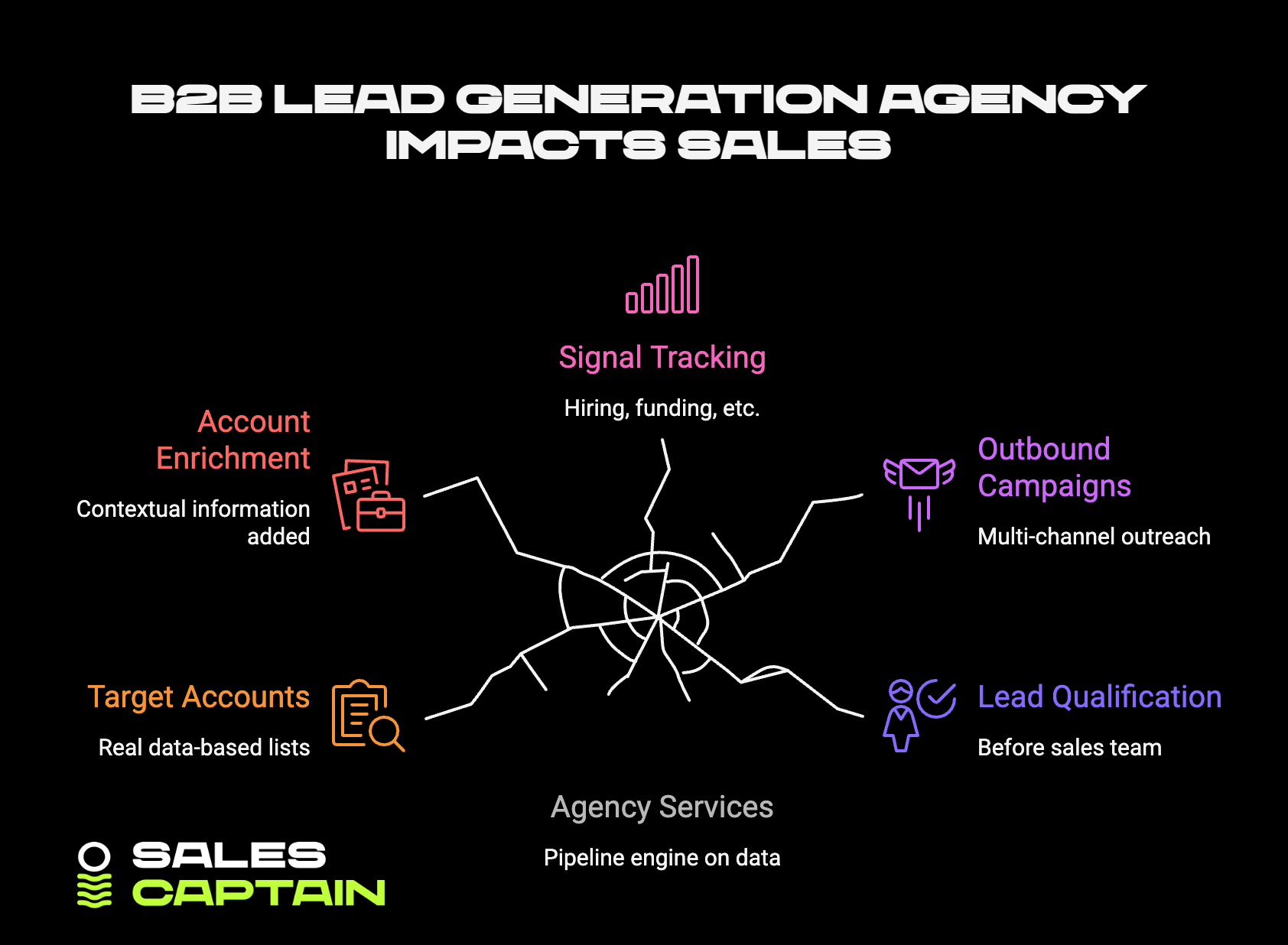
A B2B lead generation agency helps you find and convert companies that are likely to buy from you.
That’s the simple version.
The real version is closer to this: they build a pipeline engine that runs on data, signals, and continuous testing.
The old model was volume. More calls, more emails, more SDRs.
That model broke.
Now it’s about:
The best agencies don’t just “get leads.” They:
And the biggest shift?
Outbound is no longer just a sales task. It’s a marketing system.
Tools like Clay changed the game here.
Instead of static lists, you’re working with live data. You can pull signals, enrich contacts, and update lists automatically. It turns outbound into something closer to paid ads. Always running, always improving.
This is also where agencies like Sales Captain come in.
They’re not just executing campaigns. They’re building the system behind it. Outbound, lead generation, demand generation, cold outreach, appointment setting. All tied together so you get actual meetings, not just activity.
Most people think it’s just “they send emails for you.”
It’s not.
There’s a structure behind it, and when it’s done right, it feels more like a machine than a campaign.
Here’s how it usually works.
1. Define the ICP
This is where everything starts.
Not broad stuff like “B2B SaaS.” It’s more specific:
If this part is off, nothing else works.
2. Build and enrich lead lists
This is where agencies have an edge.
Using tools like Clay, they:
Now you’re not just looking at a list. You’re looking at a ranked set of opportunities.
3. Score leads based on intent
Not every company is worth reaching out to today.
Good agencies prioritize based on signals:
This is where outbound shifts from guessing to timing.
4. Launch multi-channel outreach
Email alone doesn’t cut it anymore.
Top agencies combine:
Each touch builds familiarity. That’s what gets replies.
5. Personalization at scale
This used to be manual. Now it’s not.
AI handles:
So you get relevance without slowing down.
6. Qualification before handoff
Sales teams don’t want more leads. They want better ones.
Agencies filter for:
So when a meeting gets booked, it’s actually worth taking.
7. Continuous testing
This part matters more than people think.
The best teams treat outbound like a lab:
That’s how results compound.
Most in-house setups hit a ceiling fast.
You’ve got a couple of SDRs, a data tool, maybe some sequences running. It works for a bit, then performance drops.
Not because the team is bad. Because the system is limited.
Here’s the real difference.
In-house:
Agencies:
The key shift is this:
In-house teams rely on effort. Agencies rely on systems.
And systems scale better.
This is also why the SDR role is changing.
First-touch outreach is getting automated. What’s left is nurturing and closing.
If you treat all leads the same, your pipeline will look full and still not convert.
Here’s how they actually differ.
These are early signals.
Someone downloaded something, visited your site, maybe joined a webinar.
They’re interested. But not ready yet.
Good for volume. Not great for immediate pipeline.
These are vetted.
They:
This is what most teams actually need more of.
Good agencies focus here. Not just filling your CRM, but filling your calendar with the right people.
Sales Captain, for example, optimizes around qualified meetings. Not raw lead count.
This is where things get interesting.
These leads are based on signals, not form fills.
Things like:
These signals tell you they might be in-market.
So instead of waiting, you reach out at the right moment.
That’s the big shift in modern outbound.
And again, this is where tools like Clay make it possible to track and act on these signals without doing everything manually.
A lot of agencies will show you big numbers.
Leads generated. Emails sent. Open rates.
None of that matters if those leads don’t turn into real conversations.
So the first thing we look at is simple.
Do they generate:
Not just activity.
The best agencies are obsessed with SQLs, not MQL volume. They care about who shows up to the call and whether that person should even be there.
If an agency can’t clearly explain how they qualify leads, that’s a red flag.
Not every agency works for every company.
Some are great with SaaS. Others focus on agencies, fintech, or enterprise.
What matters is pattern recognition.
Agencies that have worked with your type of ICP already know:
That shortens the learning curve a lot.
You don’t want them “figuring it out” on your budget.
This is where the gap really shows.
Average agencies buy lists.
Top agencies build data engines.
They use tools like Clay to:
This changes everything.
Instead of static campaigns, you get dynamic targeting that improves over time.
Suggested image placement: Clay dashboard showing enriched leads with columns like hiring signals, tech stack, and decision-makers.
Also worth noting, strong agencies don’t rely on one tool. They stack:
It’s a system, not a tool.
Lead gen pricing can get messy.
Some agencies charge per lead. Others per meeting. Others on retainer.
None of these are bad by default.
What matters is clarity.
You should know:
If pricing feels vague, expectations will be too.
Case studies can be polished. Reviews can be biased.
But together, they tell a story.
Look for:
Even better if the agency can show:
That’s usually a sign they actually understand the process.
Sales Captain is an intent-triggered outbound execution agency for B2B SaaS that launches campaigns only when real buyer signals appear.
No static lists. No blind outreach.
Everything starts with timing.
That alone puts them in a different category from most lead generation agencies.
Most agencies either:
Sales Captain builds outbound around when someone is ready and how aware they are, not just who they are.
They use a three-layer approach based on the buyer’s stage.
1. Not problem-aware or solution-aware
This is early stage.
Instead of pitching, they run AI-driven outbound that creates awareness. The goal is simple. Get on the radar before competitors even show up.
It’s subtle, but it compounds.
2. Problem-aware (signal-driven)
This is where most of the pipeline gets created.
Signals like:
trigger campaigns with offers tied to that exact moment.
Not generic “let’s hop on a call” messages.
Actual context.
This is where their intent-triggered model really shows up. Outreach happens because something changed, not because a list was uploaded.
3. Brand-aware but not converted
Most agencies ignore this bucket.
Sales Captain doesn’t.
If someone already knows you but didn’t convert, they run inbound-style campaigns with new offers to re-engage them.
Different angle. Same account. Better timing.
Another big difference is how they think about offers.
Most agencies focus on copy.
Sales Captain focuses on what you’re actually offering.
They build market-specific offers that:
That’s a huge lever most teams overlook.
They also run everything with a performance mindset.
Campaigns are treated like experiments:
No long waiting cycles. Just constant feedback.
This is why they can generate results even when:
They’re not relying on volume.
They’re relying on:
And that combination is hard to beat.
SaaS companies tend to get the most out of this model.
There’s always movement. New hires. New funding. New triggers.
Which means there’s always a reason to reach out.
Growthonics is a lead generation agency that focuses mainly on LinkedIn outreach and basic outbound execution. They help companies run campaigns, improve profiles, and generate conversations through consistent activity. Their approach is relatively simple and works well for teams that want a straightforward way to get started with outbound without building complex systems.
OutboundFlow provides standard outbound services built around cold email campaigns and SDR-style workflows. They manage lead lists, create sequences, and handle outreach execution for clients. The structure is familiar and easy to understand, making it suitable for companies looking for a traditional outbound setup.
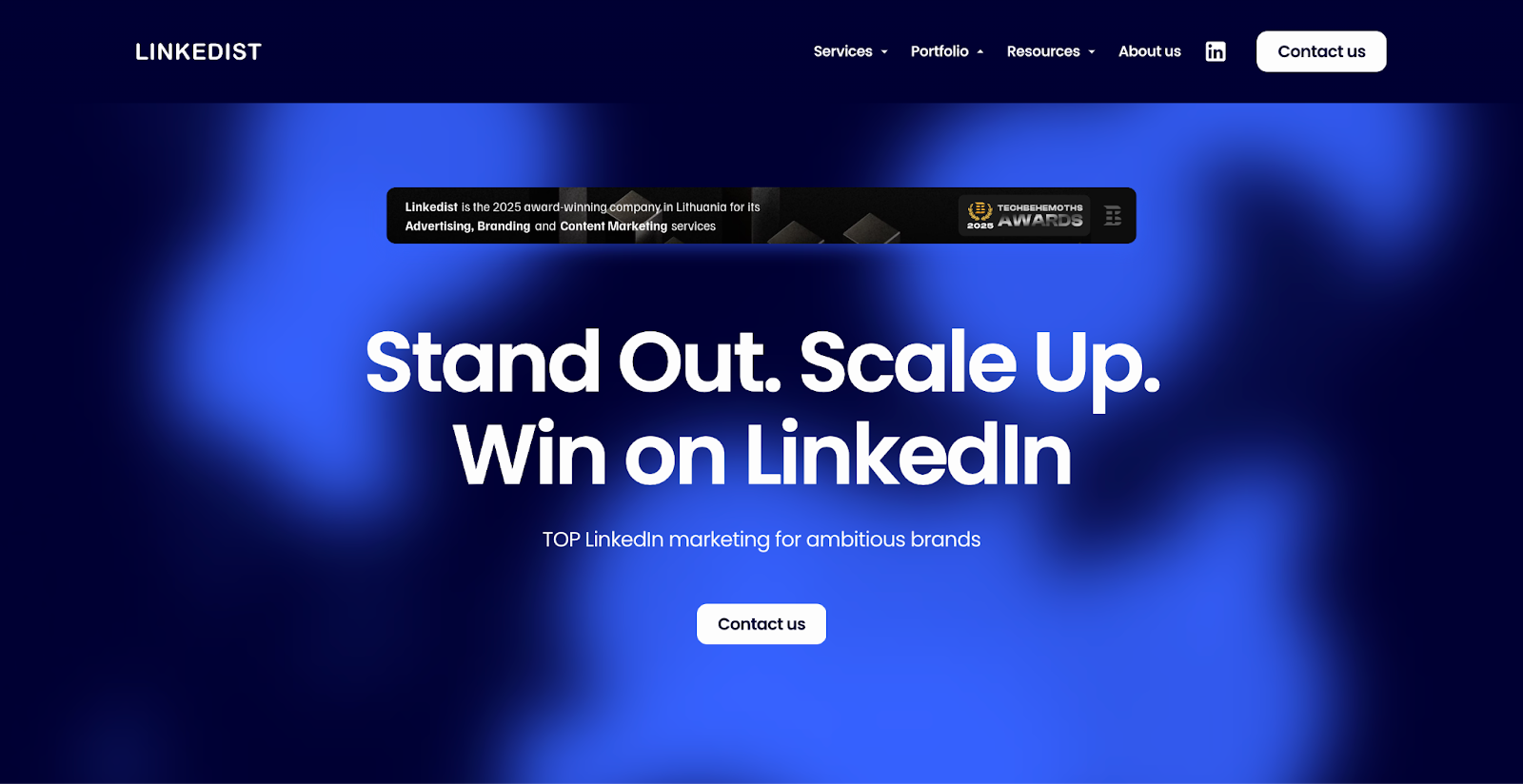
Linkedist provides lead generation services primarily focused on LinkedIn as a core acquisition channel. They help businesses run outreach campaigns, improve profile positioning, and generate conversations through consistent activity and targeting. Their approach combines content, outreach, and basic campaign management, making it suitable for teams looking to leverage LinkedIn without building an in-house system.
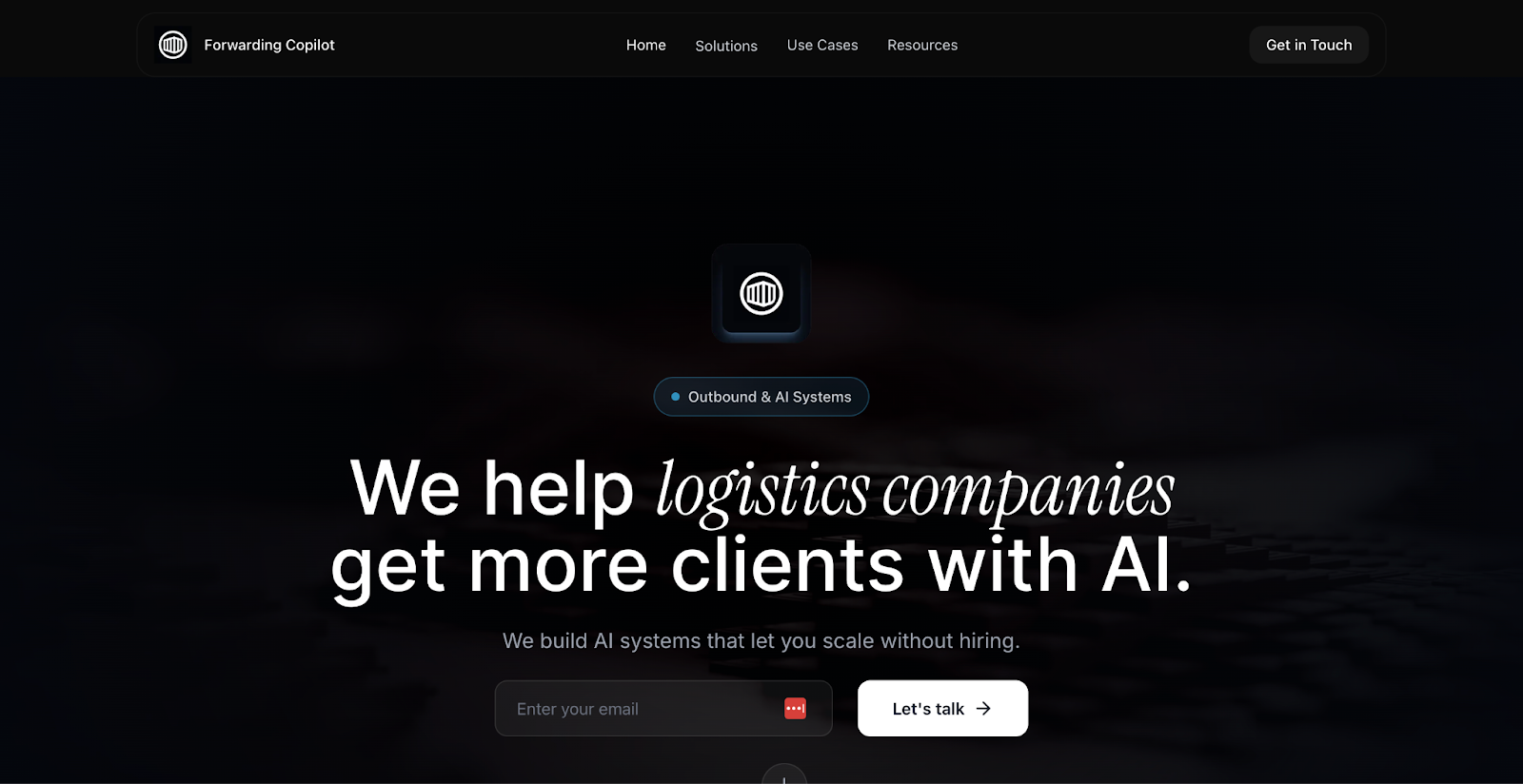
Forwarding Copilot offers outbound lead generation services tailored to logistics and freight companies. They help businesses identify potential clients, manage outreach, and support sales processes that involve longer deal cycles. Their approach is structured around industry-specific workflows, making it easier for companies in this niche to run outbound without building custom systems internally.
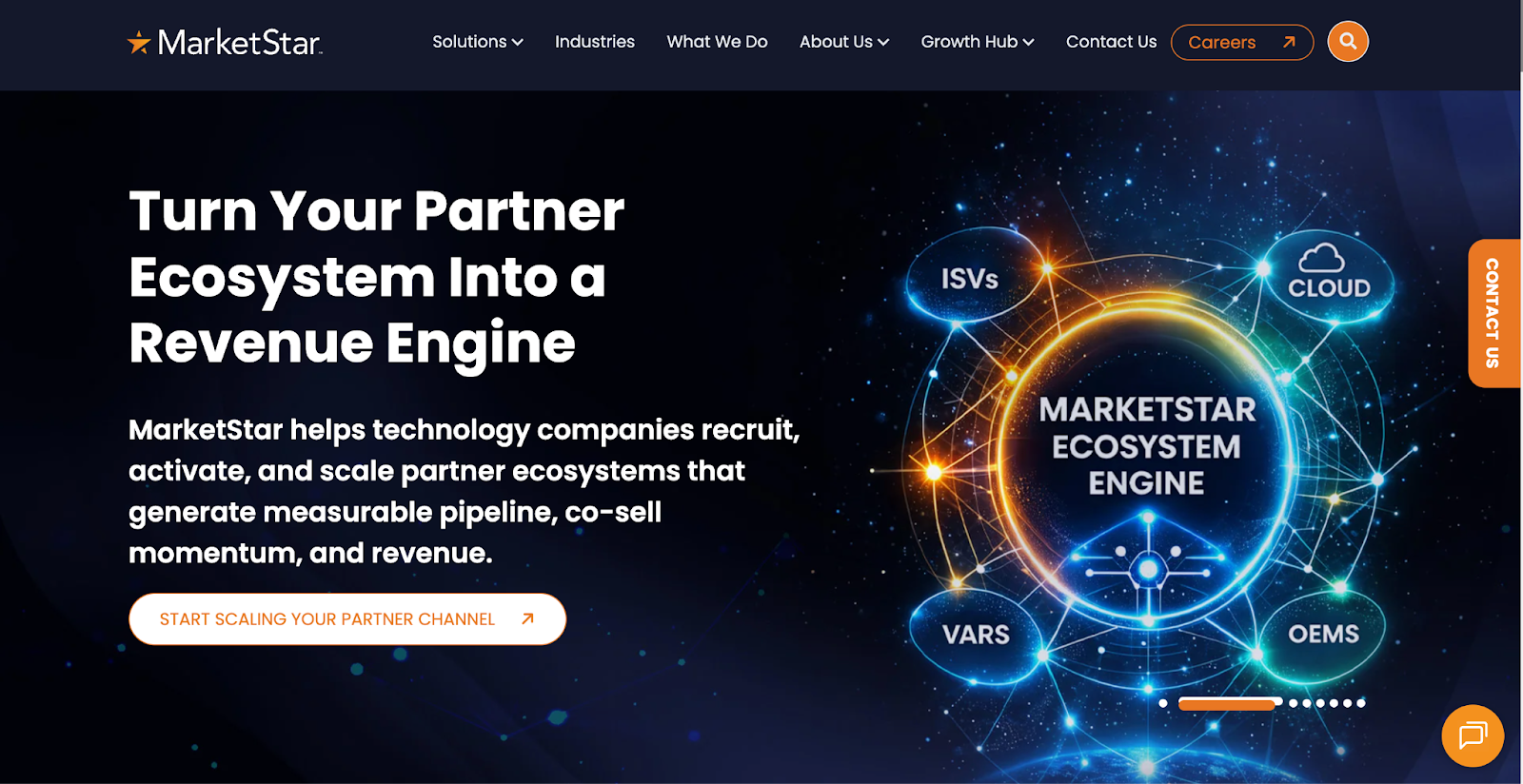
MarketStar is an agency that focuses on appointment setting through cold email and outbound campaigns. They handle outreach execution and aim to generate meetings for sales teams. Their model is simple and centered around consistent campaign activity.
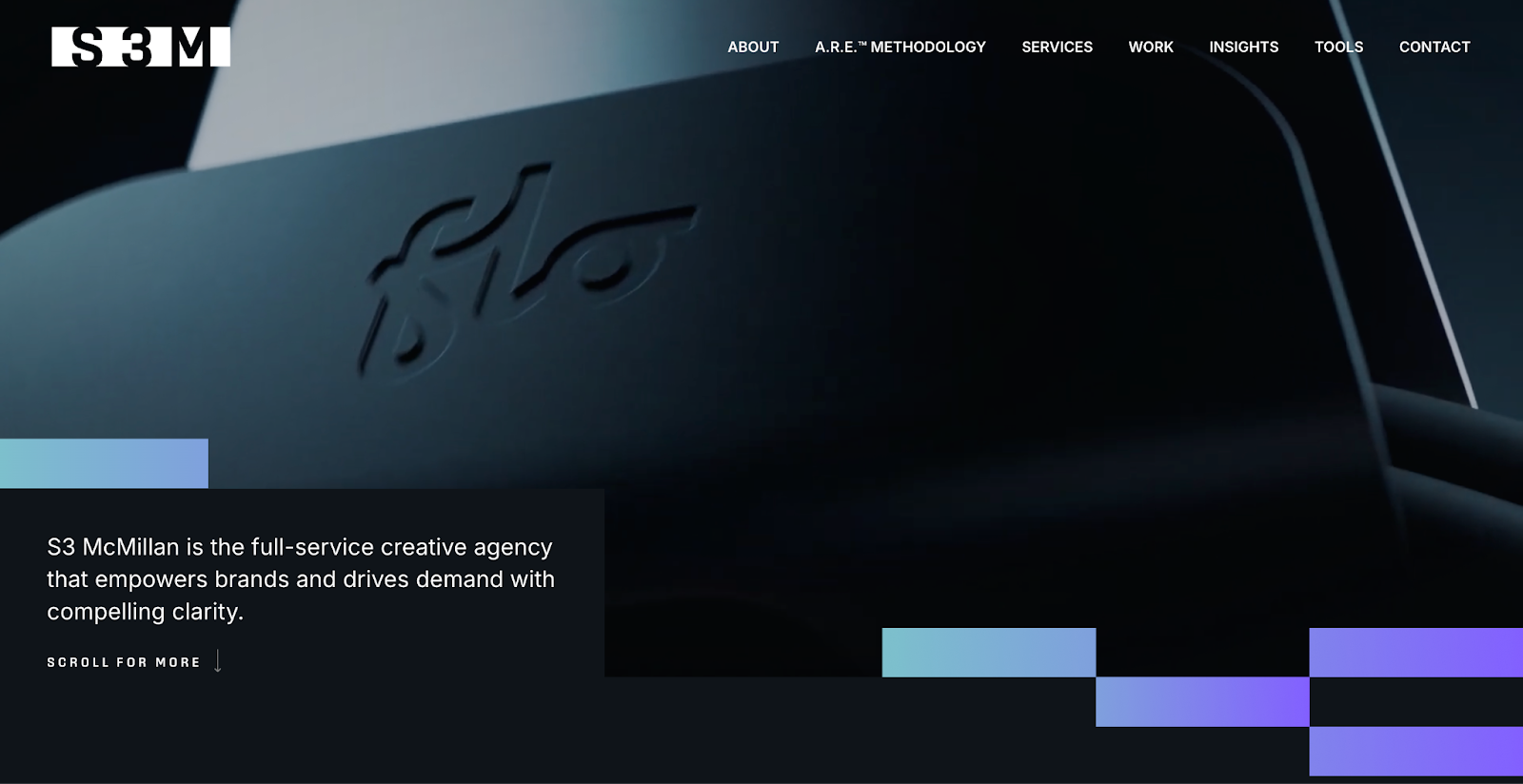
S3 McMillan provides B2B marketing and demand generation services for companies looking to build pipeline and improve brand positioning. They support campaign planning, messaging, and execution across different channels. Their work is more aligned with broader marketing efforts, but can complement outbound strategies for companies that need additional support.
B2B Only provides outsourced sales development services, helping companies manage prospecting and lead qualification. They operate as an external SDR team and handle outreach and meeting booking. This allows businesses to add outbound capacity without hiring internally.
Pipeline Gurus works with small and mid-sized businesses to set up and run outbound campaigns. They focus on simple execution and accessible solutions that help companies generate leads without complex infrastructure. Their approach is straightforward and easy to implement.
Profitbl provides outbound lead generation services focused on helping B2B SaaS companies build pipeline through structured outreach campaigns. They support businesses by handling prospecting, running campaigns across multiple channels, and acting as an external SDR function. Their approach is straightforward and execution-focused, making it suitable for teams that want consistent outbound activity without building complex internal systems.
Pipeline issues don’t show up immediately. You feel them later when deals stop closing.
Agencies fix that by moving fast.
They already have:
So instead of spending months testing, you’re live in weeks.
And because outbound is cheap now, you can test quickly and adjust based on real replies, not guesses.
This game is mostly about data.
Not just contacts. Context.
Who’s hiring. Who just raised money. Who’s switching tools.
Tools like Clay make this possible by:
So you’re not working with outdated lists. You’re working with live signals.
That’s a big difference in who replies.
Hiring looks cheaper on paper. It rarely is.
One SDR comes with:
And output is limited.
With an agency, you get:
All set up already.
You’re paying for results, not effort.
In-house scaling means hiring.
Agency scaling means increasing volume inside an existing system.
Want to test a new market or ICP?
You don’t start over. You just adjust targeting and messaging.
That speed matters.
Relying on one channel is risky.
Top agencies combine a few:
Still the core channel. Works well when it’s relevant.
Builds familiarity before the pitch even lands.
Works better when there’s context, not randomness.
Reinforces everything. Same audience, same message, multiple touchpoints.
Outbound is where most pipeline still gets created.
But it’s changed a lot.
It’s no longer about blasting thousands of contacts and hoping something sticks. That gets ignored now. Or worse, filtered.
Modern outbound is:
It’s closer to performance marketing than traditional sales.
Still the backbone.
Cold email works because it’s direct and scalable. But only if it feels relevant.
What actually works now:
What doesn’t:
Most agencies run cold email. The difference is whether they’re sending volume or sending with intent.
Cold calling isn’t dead. It’s just not effective on its own anymore.
It works best when:
Without context, it feels like interruption.
With context, it feels like timing.
That’s why it’s usually paired with email or LinkedIn now, not run as a standalone channel.
LinkedIn adds familiarity.
Before someone replies, they usually check your profile. That matters more than people think.
Agencies use LinkedIn to:
It’s less about direct selling and more about staying visible.
Inbound is slower, but it compounds.
Instead of reaching out, you attract people through content and intent.
It works best when your positioning is clear and your audience is actively searching for solutions.
This is long-term.
You create content that:
The upside is high-intent leads.
The downside is time. It takes months to build momentum.
Once traffic comes in, you need a way to capture it.
That’s where:
come in.
They convert attention into leads.
The quality depends on how strong your offer is.
ABM flips the usual approach.
Instead of going broad, you go deep on a small set of accounts.
You:
It works well for:
But it requires strong alignment between sales and marketing.
Paid ads are the fastest way to generate inbound demand.
You can:
Channels include:
The challenge is cost.
Without strong targeting and clear messaging, it gets expensive fast.
This is about creating awareness before someone is ready to buy.
You’re not just capturing demand. You’re creating it.
This includes:
Content syndication also helps get your message in front of the right audience through third-party platforms.
The big picture is simple.
Most companies don’t fail because they lack channels.
They fail because those channels aren’t connected.
The best agencies don’t just run one service.
They combine outbound, inbound, and signals into one system that keeps feeding pipeline.
Bad data ruins everything.
You can have strong messaging and a solid offer, but if you’re reaching the wrong people, nothing converts.
Good agencies don’t just build lists and call it a day. They define a clear ICP, pull data from multiple sources, and keep it updated over time.
This is where tools like Clay matter. Instead of working with static lists, agencies can enrich leads continuously, filter based on real signals, and adjust targeting as things change.
That’s how you go from guessing to actually hitting the right accounts.
Personalization isn’t adding a name anymore.
Everyone does that. No one cares.
What works now is context. Why are you reaching out right now?
Strong agencies tie messaging to real signals, adjust based on segments, and keep it simple. AI helps with scale, but the thinking still matters.
If it feels templated, it gets ignored.
If your campaigns aren’t connected to your CRM, things get messy fast.
Leads slip. Follow-ups get missed. No one knows what’s working.
A good setup makes sure leads go straight into your CRM, activity is tracked automatically, and results are visible in one place.
You should be able to answer where a lead came from, which campaign worked, and what’s actually converting.
If you can’t see that, you’re guessing.
One touch isn’t enough anymore.
Most people don’t reply the first time. That’s normal.
Good agencies build sequences across channels like email, LinkedIn, and sometimes calls or paid touchpoints.
Each interaction builds familiarity. By the time someone replies, it doesn’t feel random.
This isn’t exciting, but it matters.
Different regions have different rules, especially if you’re targeting globally.
Agencies need to use compliant data, respect opt-outs, and follow outreach regulations.
Ignoring this can create problems later.
At the end of the day, you’re not hiring an agency for activity.
You’re hiring them for a system that targets the right people, reaches them at the right time, and shows you what’s actually working.
This is the easiest model to understand.
You pay for each lead the agency delivers.
Sounds great on paper. No results, no cost.
But here’s the catch.
Not all leads are equal.
Some agencies optimize for volume, not quality. So you might get a lot of leads that:
The real question isn’t “how many leads,” it’s “how many turn into meetings.”
If you go with PPL, you need very clear definitions of what a qualified lead actually is.
This is the most common model.
You pay a fixed monthly fee for ongoing services like:
It gives the agency room to test, improve, and build a system over time.
The upside is consistency.
The downside is risk.
If the agency is weak, you’ll feel it after a couple of months with little to show for it.
This model works best when the agency is focused on long-term pipeline, not quick wins.
This model ties payment to outcomes.
Usually things like:
It sounds ideal, and in some cases it is.
But there’s a tradeoff.
Agencies that work on performance tend to be selective. They’ll only take clients where they’re confident they can win.
Also, performance models can sometimes push agencies to prioritize quantity over fit if not structured carefully.
Still, when aligned properly, this is one of the strongest models.
Most modern agencies use a mix.
Part fixed, part performance.
For example:
This creates balance.
The agency gets stability. You get accountability.
It also aligns incentives better than pure retainer or pure performance.
Pricing varies a lot depending on:
But here’s a rough idea.
You’ll usually see:
What matters more than price is what you’re actually getting.
Are you paying for:
That’s the real distinction.
Cheap lead generation often ends up being expensive if the leads don’t convert.
If your ICP is vague, nothing else will work.
Most companies say things like “B2B SaaS” or “mid-market companies.” That’s too broad.
You need clarity on:
The more specific this is, the easier everything becomes. Targeting, messaging, even offer creation.
Agencies can’t fix a weak ICP. They can only execute on what you give them.
Every agency will say they get results.
That doesn’t mean much.
What you want to look for is:
Also look at how they talk about results.
If everything is framed around “leads generated,” that’s surface level.
If they focus on meetings, pipeline, and conversion, that’s a better sign.
This part is usually overlooked.
Ask them directly how they define a qualified lead.
A strong answer will include:
A weak answer will focus on volume.
This matters because your sales team will feel it immediately.
More leads doesn’t help if none of them are worth taking.
Misalignment here kills a lot of partnerships.
Before you start, agree on:
That could be:
If you don’t define this early, you’ll end up debating results later.
Don’t commit long-term right away.
Start small.
Run a pilot to test:
This gives you real data before scaling.
Good agencies are confident enough to prove value early.
Choosing an agency isn’t about picking the biggest name.
It’s about finding one that can actually build pipeline for your market.
Working with an agency can speed things up in a way that’s hard to replicate internally.
The biggest advantage is momentum. You’re not starting from scratch. You’re plugging into something that already works.
Faster results
Agencies already have campaigns, data sources, and workflows in place. That means you can go live quickly and start generating pipeline without long setup times.
Access to expertise and tools
You’re not just getting people. You’re getting their stack, their processes, and everything they’ve learned from past campaigns. Tools like Clay, enrichment platforms, and outreach systems are already part of their workflow.
Scalable growth
Once things start working, it’s easier to scale. You don’t need to hire more SDRs or rebuild processes. You just increase volume inside an existing system.
Agencies aren’t perfect. There are tradeoffs, and it’s better to be clear about them upfront.
Higher upfront cost
Compared to hiring one SDR, agencies can feel expensive at first. You’re paying for a full setup, not just one person. The return usually comes later once pipeline builds.
Less direct control
You’re not managing every detail day to day. That can be uncomfortable if you’re used to having full control over messaging and execution.
Dependency on external teams
Your pipeline is partially tied to an external partner. If the relationship doesn’t work out, there can be a gap while you transition or rebuild internally.
At first glance, in-house looks cheaper.
One SDR, one salary. Simple.
But it adds up fast.
You’re paying for:
And even then, output is limited.
With an agency, you’re paying more upfront. But you’re getting:
So the real question isn’t cost. It’s cost per result.
If your in-house team takes months to produce pipeline, it’s not cheaper. It’s just slower.
Speed is where the gap becomes obvious.
In-house teams need time:
Agencies skip that.
They already have:
So you launch faster.
Scaling is also different.
In-house means hiring more people.
Agencies scale by increasing volume inside the same system.
That’s a big difference in how fast you can grow.
With in-house, you have full control.
You decide:
That’s valuable, especially early on.
But control doesn’t always mean better results.
Agencies bring:
You’re trading some control for expertise.
For most companies, that trade makes sense once they want to grow faster.
In-house makes sense when:
Agency makes sense when:
A lot of companies end up doing both.
Agency to build momentum. In-house to support and scale later.
AI changed outbound completely.
What used to take hours now takes minutes.
Things like:
are now automated.
Tools like Clay make it possible to pull data, score leads, and trigger campaigns without manual work.
This is why outbound is no longer expensive.
It’s scalable.
The biggest shift is moving away from static lists.
Timing matters more than targeting alone.
Signals like:
tell you when a company might be ready to buy.
The best teams build campaigns around these signals.
That’s how you move from random outreach to well-timed conversations.
Personalization used to slow everything down.
Now it doesn’t.
AI can:
So you get relevance without sacrificing speed.
The key is not overdoing it.
Simple, clear, and contextual still wins.
Single-channel outbound is fading.
People don’t live in one place.
They check email, scroll LinkedIn, see ads.
The best campaigns combine:
So prospects see you more than once, in different contexts.
That builds familiarity faster.
More isn’t better anymore.
Better is better.
Sending thousands of emails means nothing if none convert.
The focus now is:
This is where most teams are still catching up.
The ones that figure it out early usually win.
This is the fastest way to waste time.
Cheap lead gen looks attractive in the beginning. Lower monthly cost, quick decision.
But it usually comes with:
You end up paying less per month but more in missed opportunities.
The better question is not “how much does it cost” but “what does it actually produce.”
A full CRM can feel like progress.
It’s not.
If those leads don’t convert into meetings or pipeline, they’re just noise.
This happens when agencies optimize for:
Instead of:
Quality is what drives revenue. Everything else is a distraction.
If you don’t define success early, things get messy later.
You need clear answers to:
Without this, you’ll end up debating performance instead of improving it.
Good agencies will push for this clarity upfront.
Even a good strategy can fail with bad communication.
You need:
If campaigns are running but you don’t know what’s happening, it creates friction.
The best setups feel collaborative, not outsourced.
A lot of teams expect results immediately.
That’s unrealistic.
Outbound needs testing:
If you skip this phase or rush it, you miss what actually works.
The first few weeks are about learning. The results come after.
They help you find and convert potential customers.
That includes:
The goal is to generate pipeline, not just contacts.
It varies.
Most agencies charge:
Costs depend on your market, ICP, and campaign complexity.
The important part is what you get in return, not just the price.
They are if you choose the right one.
A strong agency can:
A weak one will just add noise.
Usually a few weeks to start seeing signals.
But meaningful results take time.
You need:
Outbound improves as it runs.
Most B2B industries can benefit.
But it works especially well in:
Any business with a clear ICP and defined offer.
Lead generation captures existing demand.
Demand generation creates it.
One focuses on getting leads now.
The other focuses on building awareness so more people want your solution later.
They usually look at:
Some use forms or calls. Others use signals and behavior.
The goal is to filter out low-quality leads before they reach sales.
Yes, especially if they need pipeline quickly.
Agencies can help:
Without building everything internally.
It depends on your audience.
But the most common ones are:
The best results usually come from combining channels.
You track:
Not just leads.
ROI comes from revenue, not activity.


.svg)


.svg)

.svg)


.svg)


