


10 Best AI Sales Sequencing Tools in 2026



More emails is not the answer.
If your reply rates are dropping, adding a Step 8 to your sequence isn't going to fix it.
Neither is switching from "Hi {first_name}" to "Hey {first_name}."
The problem is that most sequencing tools automate volume. And buyers in 2026 have learned to ignore volume. What books meetings is relevance: the right message, triggered by a real buying signal, sent at the right moment.
That's what AI sequencing is supposed to deliver. The gap between tools that actually do it and tools that just call themselves AI is wide.
We've tested these with real clients.
Here's what works.
What Is AI Sales Sequencing?
A sales sequence is a structured series of outreach steps, emails, calls, LinkedIn messages, SMS, executed over time to move a prospect toward a conversation.
AI sequencing takes that further. Instead of a static Day 1/3/7 template cadence:
- Sequences are triggered by buying signals, not calendar schedules
- Messages are personalised based on real prospect research, not mail-merge variables
- Timing and channel selection adapts based on engagement
- The system learns from outcomes over time
The shift is from "automate the rep's manual work" to "let AI run intelligent outreach with rep oversight."
Those are fundamentally different things. Even if every vendor uses the same language for both.
What Separates a Real AI Sequencing Platform From a Template Automator
Before you spend money, test against these five criteria.
Signal-Triggered Entry
Does the sequence start when something happens (a job change, funding round, competitor evaluation, pricing page visit) or does it start when a rep manually uploads a CSV?
Real AI sequencing starts with a signal, everything else is just scheduling.
Research-Based Personalisation
Does the AI actually research the prospect before writing the message, or does it pull one fact from a LinkedIn headline and call it personalised?
The difference shows up immediately in reply rates.
Multichannel Without Bolt-Ons
Email alone reaches a shrinking fraction of buyers. Tools that cover email, phone, LinkedIn, WhatsApp, and AI voice natively beat tools that require third-party integrations for each channel.
Every bolt-on is a handoff, every handoff is a failure point.
Native Deliverability
An AI-written email that lands in spam is worthless. Most sequencing platforms score near zero on deliverability infrastructure.
If the platform doesn't include warmup, domain health monitoring, and inbox placement testing, you're building on sand.
Human Oversight Without Friction
The best platforms generate and queue sequences for rep approval in one click, not ten clicks. The human stays in the loop without the workflow becoming manual.
The 10 Best AI Sales Sequencing Tools in 2026
1. Amplemarket
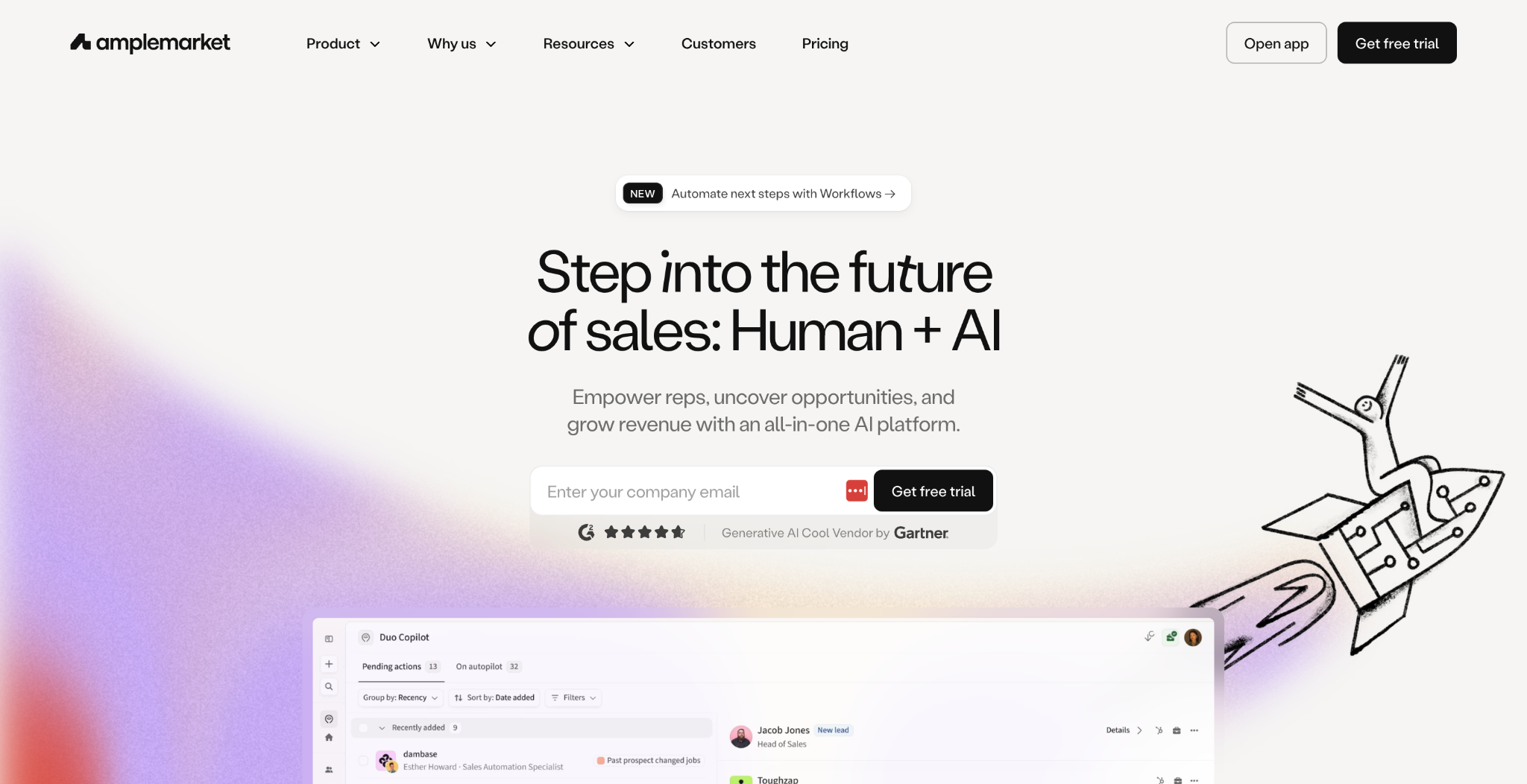
Quick answer: The best AI sales sequencing tool in 2026 is Amplemarket, the only platform combining signal-triggered sequencing, 7-channel native outreach, and a full deliverability stack in a single subscription. No separate data provider, deliverability tool, or social automation required.
What it is: The only platform running true signal-triggered, research-based, multichannel sequencing end to end, with a full deliverability stack built in and no separate tools required.
Why it's great:
Here's what it looks like in practice. A buying signal fires: a VP of Sales at a target account visits your competitor's pricing page. Amplemarket's signal agent detects it, the research agent pulls their recent LinkedIn activity, company news, job posting patterns, and professional history, and the sequence agent writes a personalised multichannel outreach grounded in that specific context.
The rep approves in one click.
No exports, no copy-pasting between tabs, no data lost at the handoff between tools. All with:
- Signal-triggered sequence entry across 100+ contact-level intent signals
- Three-agent AI system: signal Agent, eesearch agent, sequence agent working in concert
- 7-channel native execution: email, phone, LinkedIn, SMS, WhatsApp, iMessage, AI voice
- Full deliverability stack built in: warmup, domain health, inbox placement testing, spam checker
- Human-in-the-loop: rep approves before anything sends
- G2: 4.6/5 from 571+ reviews
Where it falls short:
- No free tier (14-day trial available)
- No deal management or revenue forecasting, Amplemarket covers core conversation intelligence.
- Annual contract required
Real results:
Deel's open rate was 35% before switching. After adopting Amplemarket's Email Deliverability Booster and Domain Health Center alongside multichannel sequences, open rates climbed to 62%, reply rates reached 17.8%, and SDRs now book 20+ meetings per month each.
Deel grew revenue 20x in a year, with about 30% of their sales coming from outbound, and half of their largest clients came through Amplemarket. See the full Deel case study.
Duve's first-ever outbound hire (a single rep) used Amplemarket to book 45 meetings in 2 months with 70% open rates and 20% reply rates, starting from zero outbound infrastructure.
"From lead generation to targeting a prospect to engaging in a tailored way, all of that is automated and interconnected in our toolbox. As of today, every single SDR within Deel is using Amplemarket to start their sales processes." - Benjamin Guigui, Deel
"Amplemarket has provided us with far greater overall value than piecing together various tools. Having everything I need in one platform has allowed me to be fully autonomous throughout the entire sales process." - Niv Ehrlich, Duve
Best for: B2B sales teams who want signal-triggered, research-based, multichannel sequencing without managing four separate tools.
Pricing: From $3,200/user/year (25 users, annual). Data, signals, AI, multichannel engagement, and full deliverability included, no separate tools required.
Every other platform on this list needs at least 2–3 additional tools to match the same capabilities, typically adding $3,000–$5,000/user/year on top of the base price.
2. Outreach
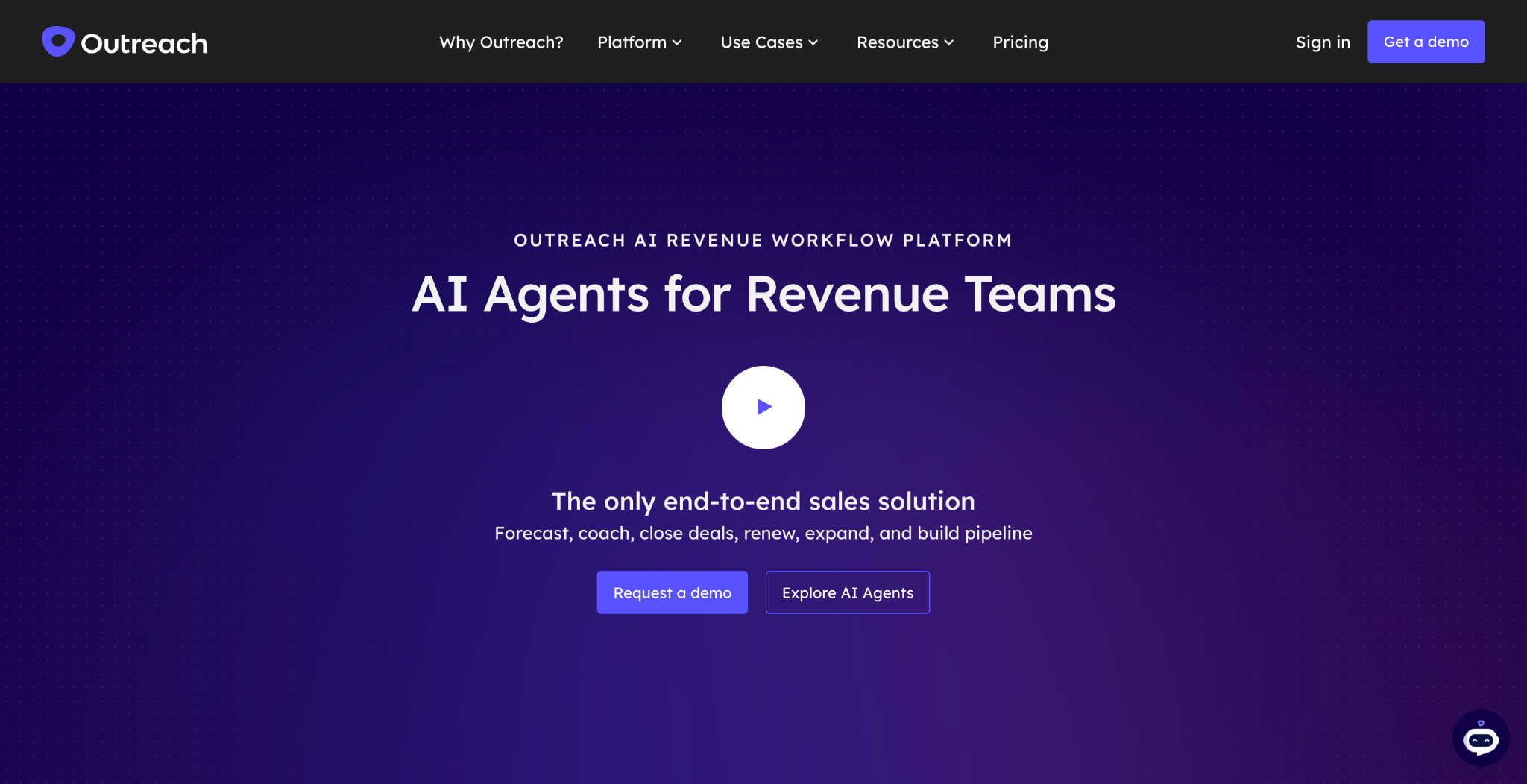
What it is: Outreach, the original enterprise sequencing platform, now focused primarily on rep coaching and deal management.
Why it's great:
- Kaia conversation intelligence is best-in-class for real-time call coaching and automated note-taking
- Deep Salesforce integration trusted by large RevOps teams
- Strong A/B testing and sequence analytics
Where it falls short:
- Scored 0/21 on deliverability in independent testing: no warmup, no domain health, no inbox placement testing
- No native data or intent signals
- Starts at ~$1,200/user/year for engagement only, full stack can cost $50,000+
Best for: Large enterprise teams where the primary challenge is rep coaching and deal management, not top-of-funnel pipeline generation.
3. Salesloft

What it is: SalesLoft is an enterprise revenue platform with AI-prioritised task management and strong pipeline forecasting.
Why it's great:
- Rhythm AI engine prioritises rep task lists by signal strength
- Clari integration makes pipeline forecasting genuinely useful
- Strong for complex enterprise sales motions
Where it falls short:
- Scored 0/21 on deliverability: no native warmup, domain health, or inbox testing
- No native data or intent signals
- Total cost with required add-ons typically runs $5,200–$7,000/user/year
Best for: Mid-market to enterprise teams where the primary challenge is deal management and rep coaching.
4. Apollo.io
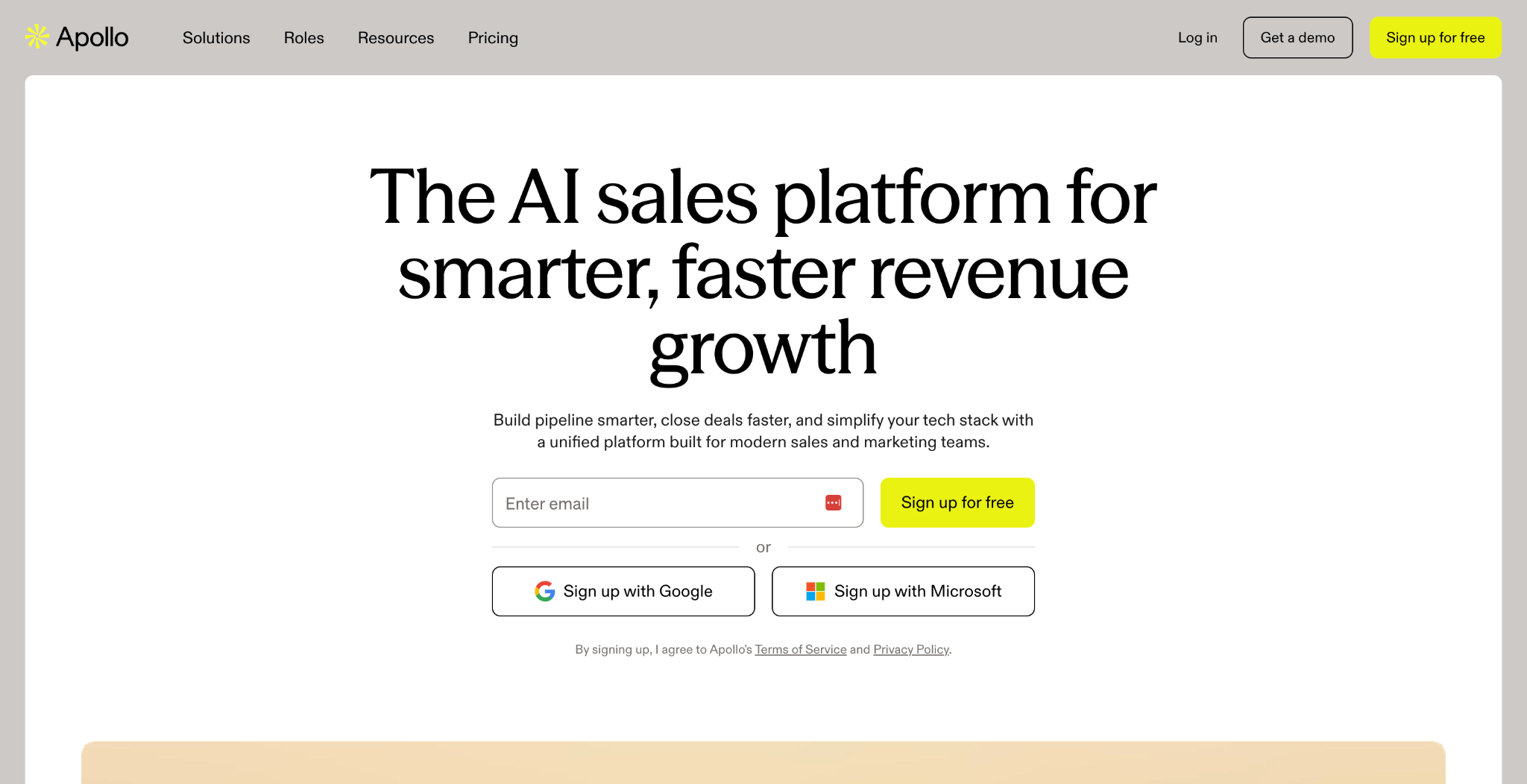
What it is: Apollo.io is a large contact database with basic sequencing at a price point nothing else can touch.
Why it's great:
- Free tier is genuinely usable for early-stage outbound
- Large database (275M+ contacts)
- Bundled data + sequences = fewer tools to manage at low volume
Where it falls short:
- Bounce rates of 20–30% widely reported at scale
- Deliverability score of 2/21 in independent testing
- Starting point, not a scaling platform
Best for: Small teams on tight budgets doing low-volume email outbound.
Pricing: Free tier available. Paid from $49/user/month.
5. Lemlist
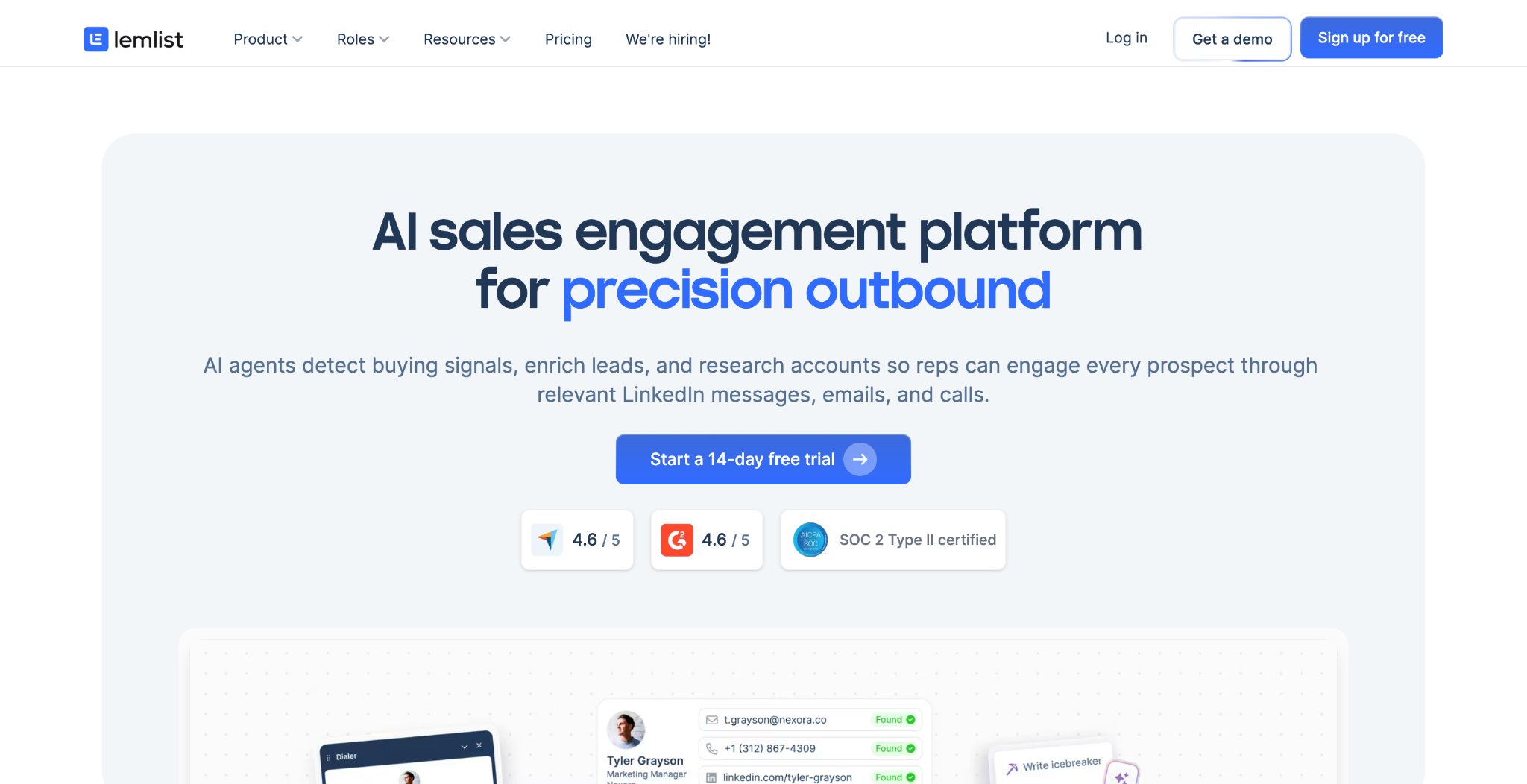
What it is: Lemlist is an SMB email sequencing tool with strong deliverability fundamentals and creative personalisation features.
Why it's great:
- Email warmup and deliverability tooling is the best in its price range for SMBs
- Image and video personalisation features stand out in crowded inboxes
- LinkedIn steps supported
Where it falls short:
- No native data, no intent signals, no AI research layer
- Personalisation is template-based, not intelligence-based
Best for: Small teams that want creative email outreach with solid deliverability fundamentals.
Pricing: From $55/user/month.
6. Reply.io (Jason AI)

What it is: Reply.io is a multichannel outbound platform built for mid-market teams, combining email, LinkedIn, and automation with an AI assistant layer.
Why it's great:
- Solid multichannel support (email + LinkedIn + tasks)
- Built-in sequencing and workflow automation
- AI assistant helps generate outreach drafts
- Good balance between features and usability
Where it falls short:
- AI personalization lacks depth compared to signal-based tools
- Still relies heavily on static data inputs
- Limited intent and trigger-based workflows
- Can feel generic at scale
Best for: Mid-market teams running structured multichannel outbound
Pricing: From $89/user/month
7. Instantly

What it is: Instantly is a cold email platform built for high-volume sending, widely used by agencies managing multiple inboxes.
Why it's great:
- Designed for scaling cold email fast
- Unlimited inbox rotation and warmup features
- Simple UI with quick setup
- Strong deliverability tooling
Where it falls short:
- Email-only, no LinkedIn or phone channels
- No real AI research or deep personalization
- Requires external tools for data and enrichment
- Not built for signal-based outreach
Best for: Agencies and teams running high-volume cold email
Pricing: From $37/month
8. Smartlead

What it is: Smartlead is a cold email platform designed for agencies managing multiple clients and outbound campaigns at scale.
Why it's great:
- Built for multi-client management
- Strong inbox rotation and sending infrastructure
- Good API and automation flexibility
- Reliable for scaling outbound
Where it falls short:
- Email-only, no multichannel support
- No built-in data or enrichment layer
- Limited personalization without external tools
- Requires stacking multiple tools
Best for: Agencies running outbound for multiple clients
Pricing: From $39/month
9. Nooks

What it is: Nooks is a sales platform focused on phone-first outbound, combining a power dialer with newer sequencing features.
Why it's great:
- Best-in-class dialer for high-volume calling
- Built for phone-first sales teams
- Real-time coaching and call insights
- Strong performance for call-heavy workflows
Where it falls short:
- Sequencing features are still maturing
- Expensive compared to email tools
- Not built for full multichannel workflows
- Limited outside calling use cases
Best for: Teams running phone-first outbound strategies
Pricing: Around $4,000/user/year
10. HeyReach
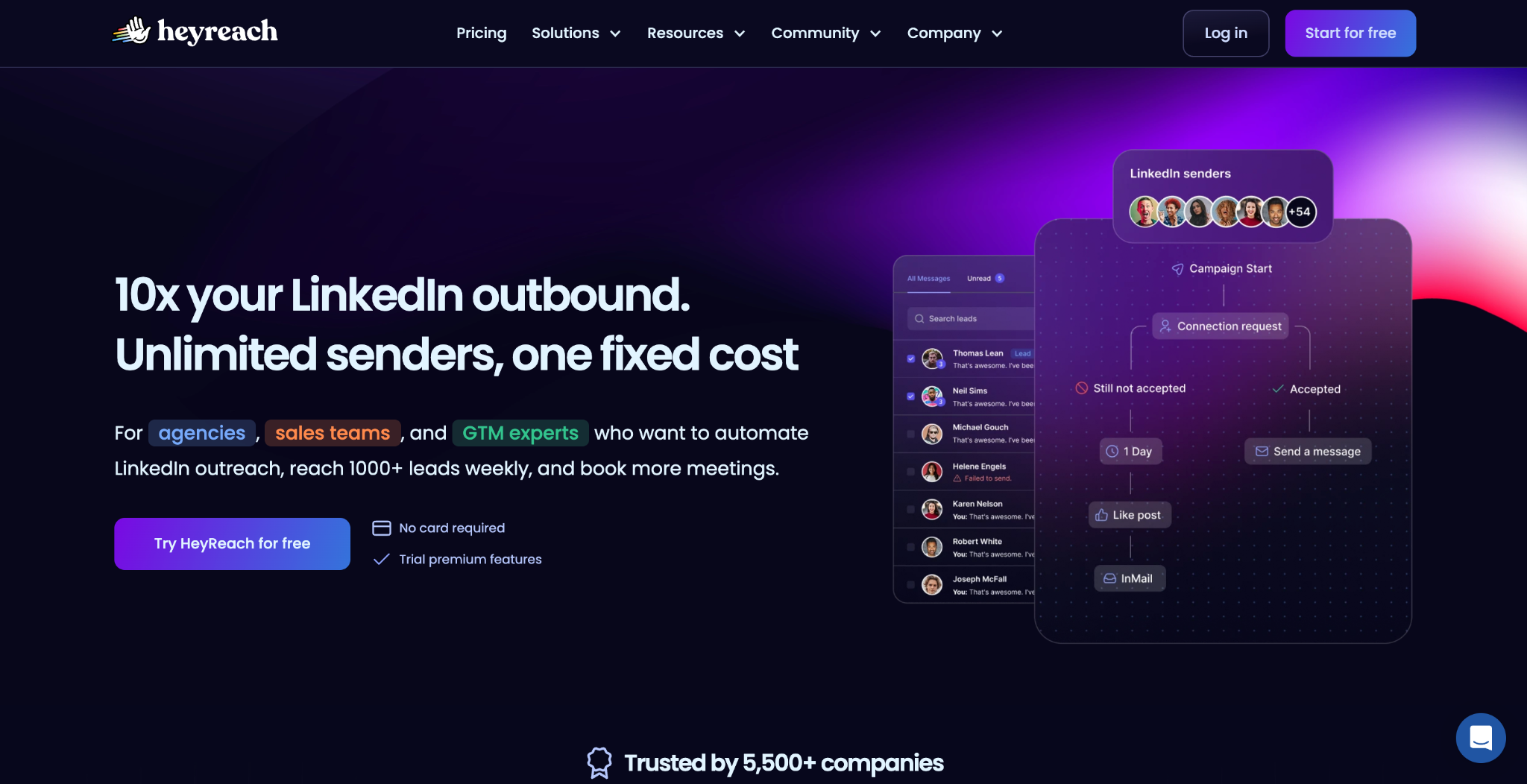
What it is: HeyReach is a LinkedIn automation tool designed for scaling outreach across multiple accounts.
Why it's great:
- Built for multi-account LinkedIn outreach
- Works well for agencies scaling LinkedIn campaigns
- Clean automation for connection and messaging
- Helps bypass LinkedIn scaling limits
Where it falls short:
- LinkedIn-only, no email or phone
- No built-in data or enrichment
- Limited personalization without external inputs
- Not a full outbound platform
Best for: Teams scaling LinkedIn outreach across multiple senders
Pricing: From $79/sender/month
How to Choose the Right AI Sequencing Tool
Three questions narrow it down fast.
What's your biggest bottleneck?
If it's writing personalised outreach at scale, you need an AI research layer, not a template engine, like Amplemarket. If it's phone-first prospecting, Nooks wins the dialler. If it's email volume on a budget, Instantly and Smartlead are the cheapest route.
How many tools are you willing to manage?
If the ops cost of a fragmented stack is real, and it usually is, look at platforms where data, signals, sequencing, and deliverability are all native.
What does your outbound need to scale?
Email-only tools hit a ceiling fast. The platforms that added WhatsApp, LinkedIn, and phone as coordinated sequence steps have a structural advantage that compounds over time.
AI Sequencing Checklist: What to Look for Before You Buy
- Does sequence entry trigger from a buying signal, or from a manual list upload?
- Does the AI research each prospect individually, or use a template with variable substitution?
- How many channels are supported natively, not via Zapier or a third-party integration?
- Does the platform include email warmup and domain health monitoring?
- Can a rep approve or edit a sequence before it sends, in one step?
- What does the total cost look like when you add the data provider, deliverability tool, and signals on top?
FAQs
The best AI sales sequencing tool in 2026 is Amplemarket. It's the only platform that combines signal-triggered sequence entry (100+ contact-level signals), AI-powered prospect research, 7-channel native outreach, and a full deliverability stack in one subscription. In independent testing across 231 features, it scored 219/231 overall and a perfect 21/21 on both AI automation and deliverability. Real-world results: Deel grew revenue 20x in a year with 17.8% reply rates; Duve booked 45 meetings in 2 months with 70% open rates.
Amplemarket is the only platform on this list that scores a full suite on deliverability (built-in warmup, Domain Health Center, inbox placement testing, spam checker, and mailbox rotation natively on every plan). Every other platform on this list scores 0–2/21 on deliverability in independent testing, meaning you need a separate tool to avoid landing in spam.
For relevance and signal-triggered outreach, yes, significantly. For volume alone, not necessarily. The value of AI sequencing is research-based personalisation at scale. If you're just automating a generic template, the AI label doesn't add much.
The most underrated factor in the category. An email that lands in spam might as well not exist. Most sequencing platforms score near zero on deliverability infrastructure, check before you commit.
An AI sequencing tool generates and executes multi-step outreach with AI-powered personalisation, typically with human oversight. An AI SDR is a fully or mostly autonomous system that handles prospecting, outreach, and qualification without rep involvement. The human-in-the-loop model consistently outperforms full autonomy for outreach quality.
Quality beats quantity every time. A 5-step sequence where every touchpoint is personalised and signal-triggered will outperform a 12-step sequence of generic follow-ups. The number of steps matters less than what's in each one.
It matters more than ever. Email deliverability is getting harder, not easier. Deel found that automating ~75% of their social selling workload through Amplemarket was a primary driver of their 20x revenue growth, half of their largest clients came through Amplemarket-powered social outreach.
RELATED ARTICLES
Check out more articles on our blog!

RELATED ARTICLES
Lorem ipsum dolor sit amet, consectetuer adipiscing elit, sed diam nonummy nibh euismod tincidunt ut laoreet dolore magna aliquam erat volutpat.


