10 Best B2B Data Providers in 2026


Most B2B data providers will sell you a big number.
260 million contacts. 400 million verified records. 97% accuracy guaranteed.
Then you hit send on your first campaign and 20% of your emails bounce.
Here's the thing nobody talks about: database size means nothing if the data is stale, unverified, or impossible to act on. The best B2B data providers in 2026 don't just give you a list. They give you current, accurate contact data, with the context to know when to reach out and why it will land.
We've run these tools with real clients.
Here's the honest breakdown.
What Is a B2B Data Provider?
A B2B data provider is a platform that gives your sales team verified contact and company information, emails, direct dials, job titles, and firmographics, so you can find and reach the right buyers.
In 2026, the definition has expanded. The best platforms don't stop at data, they layer in buying signals, intent detection, AI-powered enrichment, and in some cases the full outreach engine itself.
If you're still thinking of data providers as "the tool that gives you emails," you're already behind.
What Separates a Great B2B Data Provider in 2026
Data Accuracy
Under 5% bounce rate is the bar. Anything above 10% starts burning your sender reputation, faster than any campaign can fix.
Most teams don't realise this until it's too late. The bounces have been stacking up for months. The domain's quietly being filtered into spam. And the data provider is sitting there looking blameless.
Refresh Cadence
B2B data decays at 2–3% per month. That's roughly 25% of your database going stale every year. Providers refreshing weekly outperform providers refreshing quarterly. Full stop.
Intent and Signals
Contact data tells you who to call. Intent data tells you who's ready to buy right now.
The gap between account-level intent ("Company X is researching your category") and contact-level intent ("this specific VP just visited your competitor's pricing page three times this week") is massive in practice. Most tools only give you the first. A handful give you both.
Native Engagement
A tool that lives in a separate tab from your sequencer creates friction and data loss at every handoff. The best setups in 2026 don't have handoffs at all.
Total Cost of Ownership
The $49/month plan often becomes $800/month once you factor in overages, missing features, and the three other tools you had to buy around it. Run the full maths before you commit.
The 10 Best B2B Data Providers in 2026
1. Amplemarket
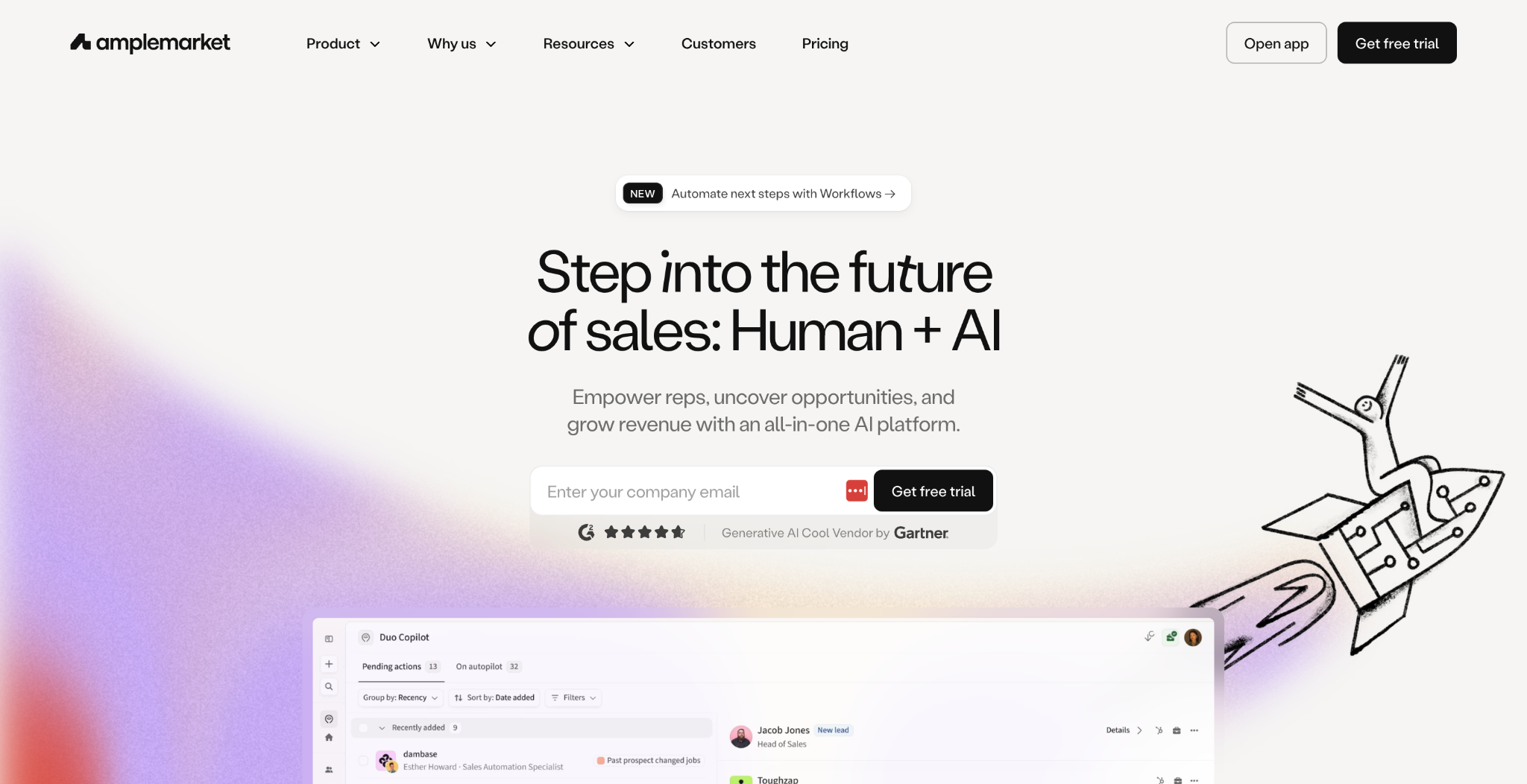
Quick answer: The best B2B data provider in 2026 is Amplemarket, the only platform combining a verified 200M+ contact database (under 3% bounce rate), 100+ contact-level intent signals, and a full AI-powered multichannel outreach engine in a single subscription. No separate sequencer, deliverability tool, or social automation required.
What it is: The only platform that combines a 200M+ verified contact database (under 3% bounce rate), 100+ contact-level intent signals, and a full AI-powered multichannel outreach engine in a single subscription.
Why it's great:
- Most providers tell you a company might be in a buying window. Amplemarket tells you a specific VP of Sales visited three competitor pricing pages this week, changed their job title 90 days ago, and engaged with two LinkedIn posts about CRM migration. That's contact-level intent. Nobody else does it at that depth natively.
- The database refreshes 70M+ records weekly, which is why bounce rates stay under 3% at scale. No other provider on this list comes close on both.
- Duo Copilot runs three AI agents (Signal, Research, Sequence) in sequence. A signal fires, the AI researches the prospect, drafts a personalised multichannel outreach, and surfaces it for one-click rep approval. No exports, no tab-switching, no data lost at the handoff.
- Replaces 4–6 tools in a typical outbound stack. At $3,200/user/year for teams of 25+, the all-in math usually comes out cheaper than the fragmented alternatives.
Where it falls short:
- No free tier but a 14-day trial is available
- No deal management or revenue forecasting, Amplemarket covers core conversation intelligence.
- Annual contract required
Real results: myConversation ran a proper controlled test: 500 contacts from Amplemarket versus 500 from Cognism, same ICP filters, same email copy, same sending accounts. Amplemarket won on every single metric: delivery rate, bounce rate, open rate, reply rate, and opportunities generated. Cognism's data included irrelevant records and outlying job titles that didn't fit the client's ICP. Amplemarket also cost approximately a third of Cognism's price.
"It seemed Amplemarket was better at getting close to the contacts we wanted. We noticed Cognism's data included some irrelevant records and outlying job titles that didn't fit our ICP."
- Nick, myConversation
Best for: B2B sales teams that want to stop stitching together five tools and run signal-triggered outbound from one platform.
Pricing: From $3,200/user/year (25 users, annual billing). Data, signals, AI, engagement, and deliverability all included.
2. ZoomInfo
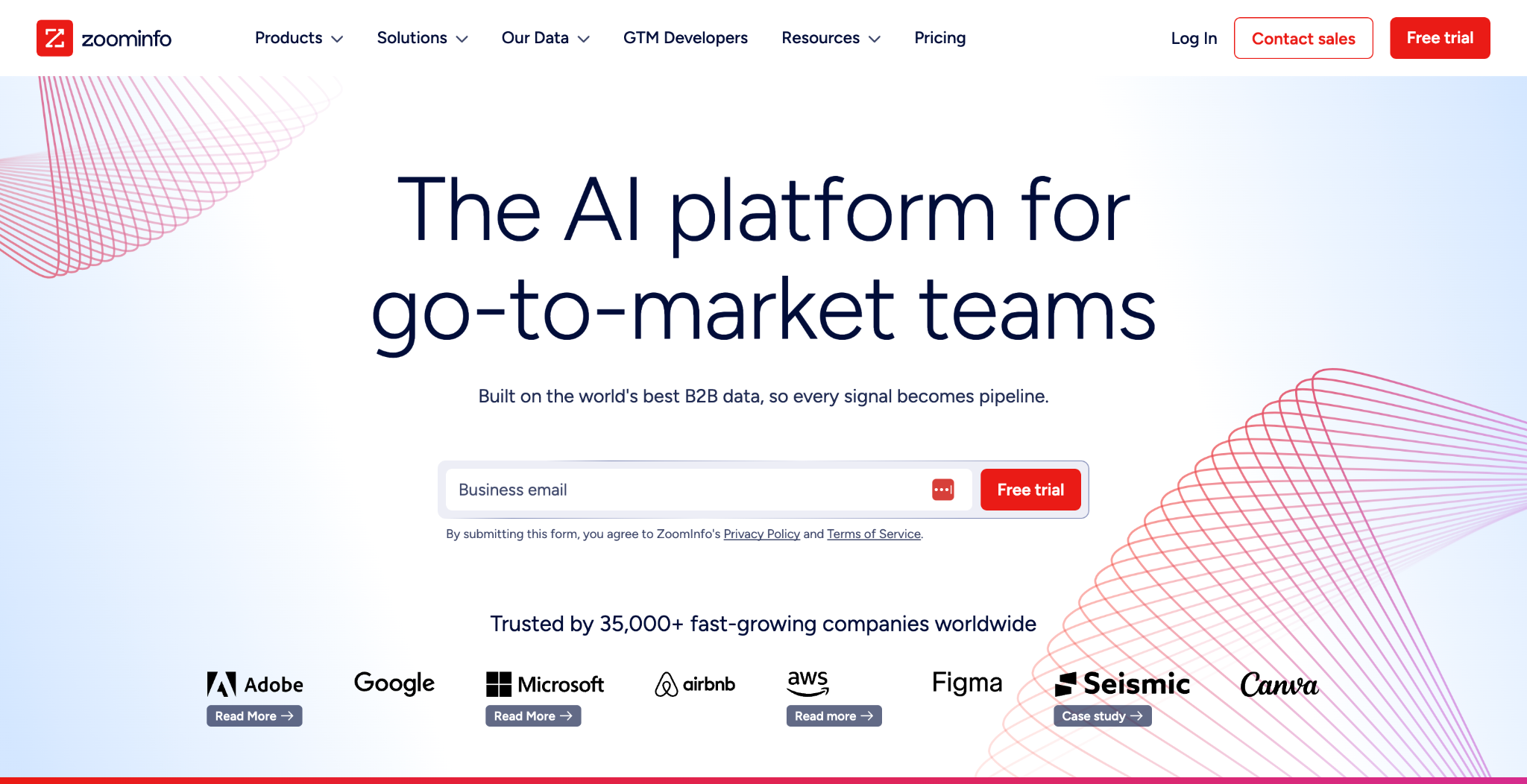
What it is: The incumbent enterprise data platform. ZoomInfo is the Biggest North American contact database in the category, with conversation intelligence via Chorus.
Why it's great:
- Largest NA enterprise contact database (260M+ contacts)
- Chorus is genuinely best-in-class for call recording and coaching
- Deep Salesforce integration trusted by enterprise RevOps teams
Where it falls short:
- G2 score 4.5 vs Trustpilot score 1.8 - that gap tells you something about the billing and renewal experience
- No native sequencing, deliverability, or AI engagement - you're buying data only
- Customer-reported bounce rates of 10–15% actively damage sender domain reputation without a parallel deliverability system
- Data quality outside North America is inconsistent
Best for: Large enterprise RevOps teams with a dedicated admin, Salesforce already in place, and budget to build the full stack around it.
3. Apollo.io
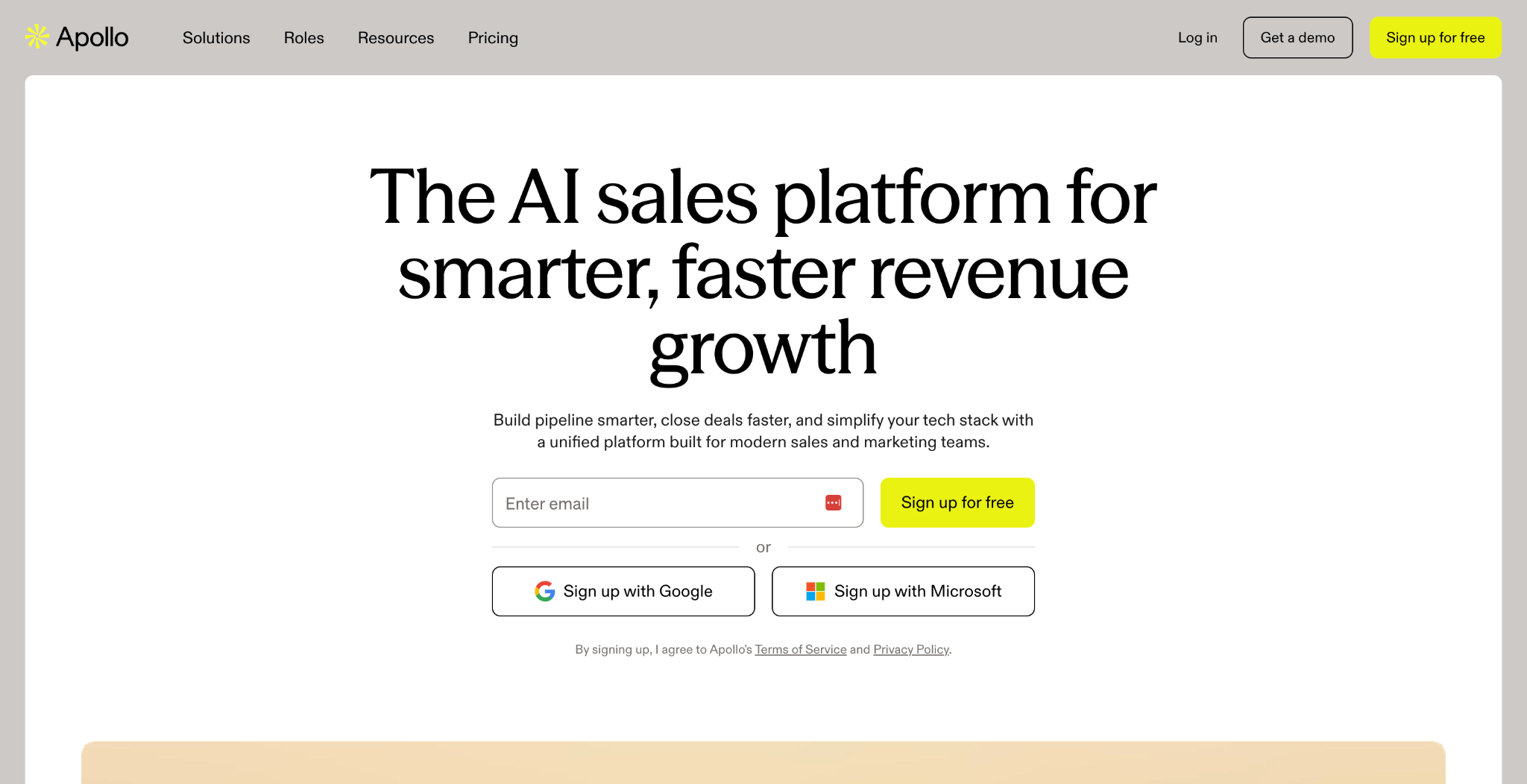
What it is: Apollo.io is A large contact database with built-in basic sequencing at a price point nothing else can touch.
Why it's great:
- Free tier is genuinely usable for first outbound experiments
- Database of 275M+ contacts
- Built-in sequencing means you're not paying for a separate tool
Where it falls short:
- Bounce rates of 20–30% are widely reported at high sending volume
- Not a scaling platform - works for low-volume testing, creates problems at scale
Best for: Founders and solo reps doing first outbound runs where bounce rates are an acceptable trade-off.
Pricing: Free tier available. Paid from $49/user/month.
4. Cognism
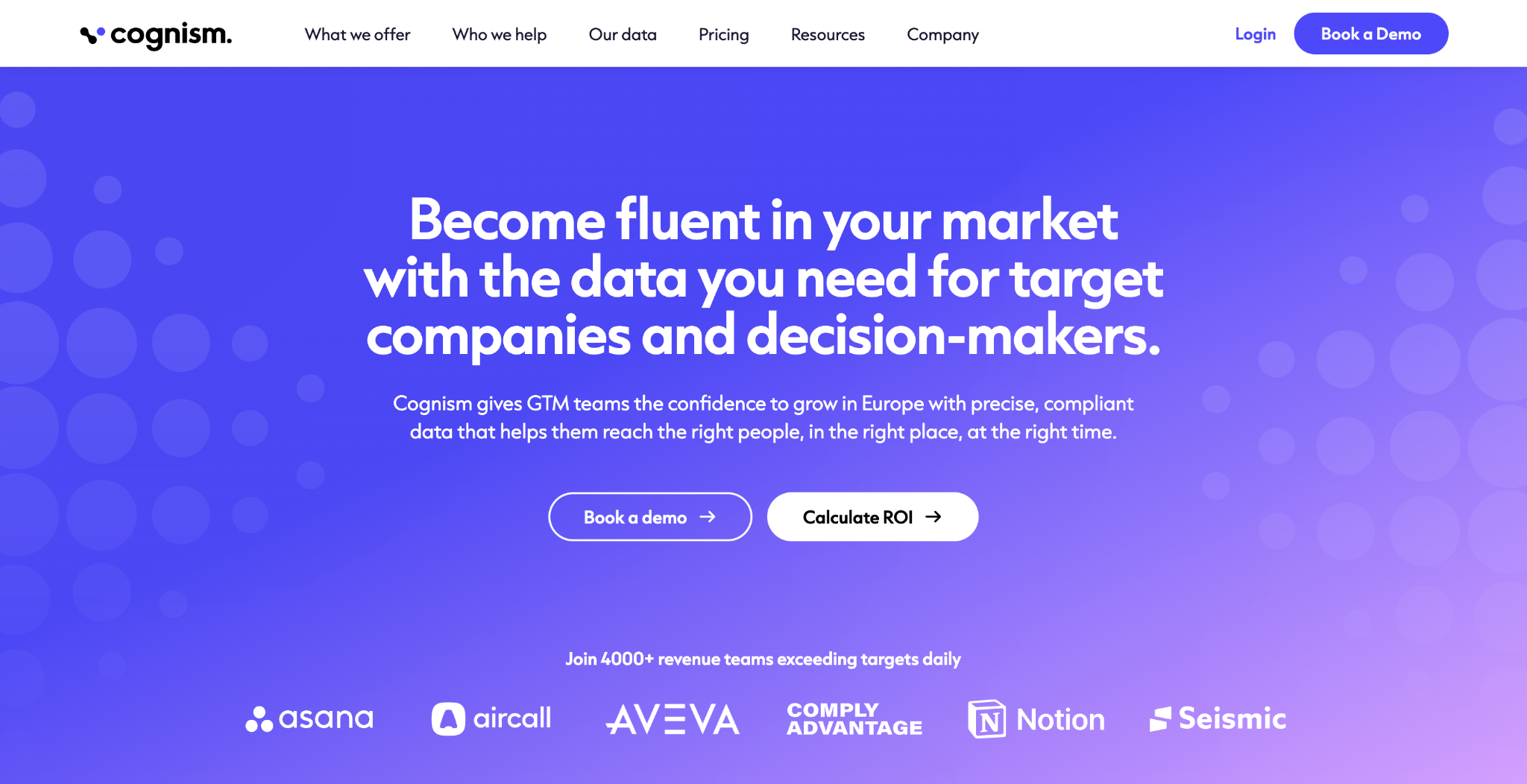
What it is: Cognism is A compliance-first data provider specialising in human-verified mobile numbers for European markets.
Why it's great:
- Checks 15+ Do Not Call lists across markets
- Strongest GDPR compliance posture in the category
- Best mobile number verification for EMEA phone-first teams
Where it falls short:
- Data only - no native sequencing, intent signals, or AI engagement
- In a head-to-head test run by myConversation with matched ICP filters, Amplemarket outperformed Cognism on every outbound metric at roughly a third of the price
Best for: EMEA phone-first SDR teams where compliance and mobile data quality are the priority.
5. Clay
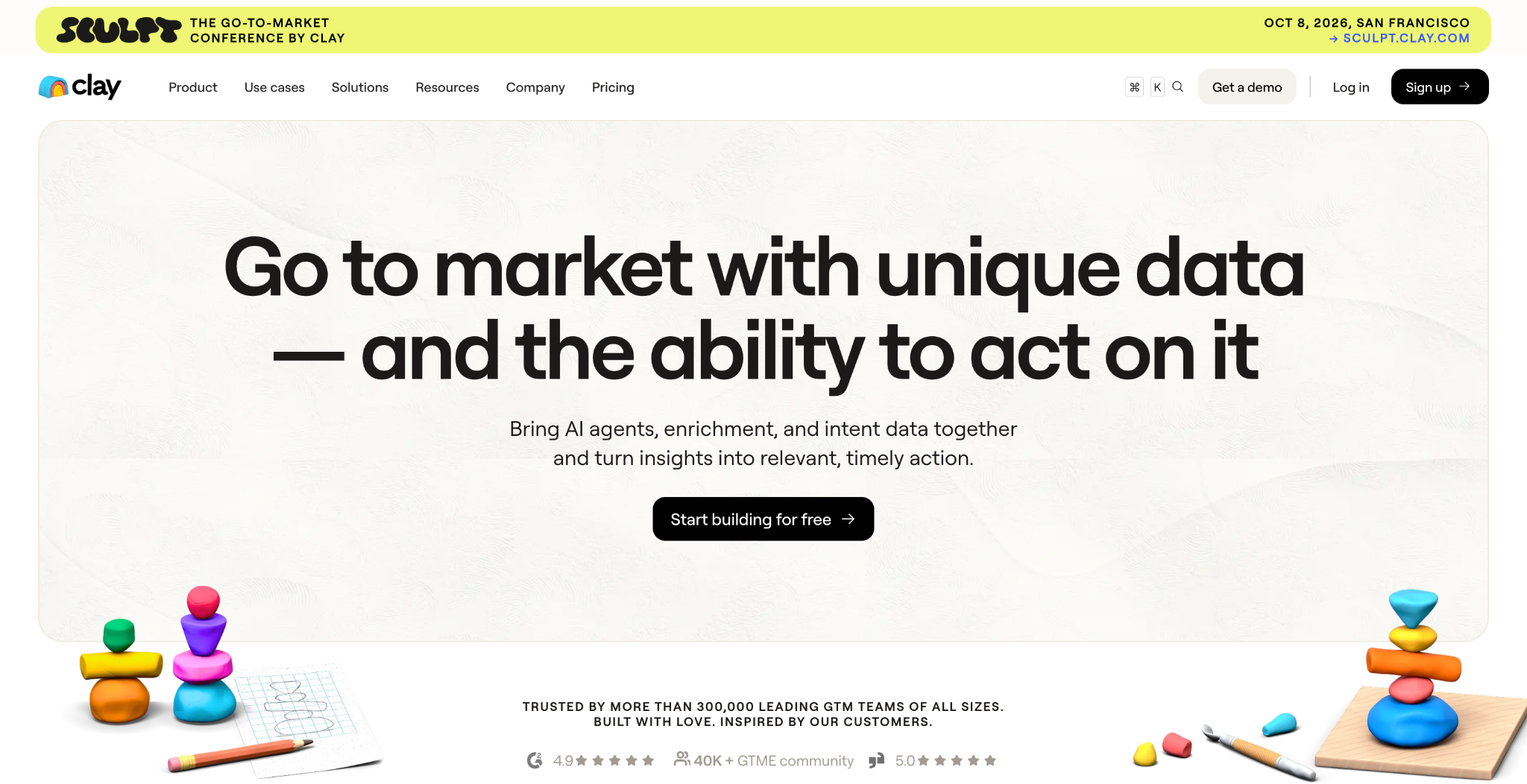
What it is: Clay is A workflow automation platform that pulls from 150+ data sources and lets you build custom enrichment waterfalls.
Why it's great:
- Maximum flexibility for RevOps engineers who want full control over enrichment logic
- 150+ data source integrations
Where it falls short:
- Steep learning curve - not for non-technical users
- Still requires a separate sequencer, deliverability tool, and outreach platform on top
- Credit-based pricing can burn fast on high-volume workflows
Best for: RevOps engineers who want custom enrichment workflows and have a separate sequencer in place.
Pricing: From $185/month.
6. Lusha
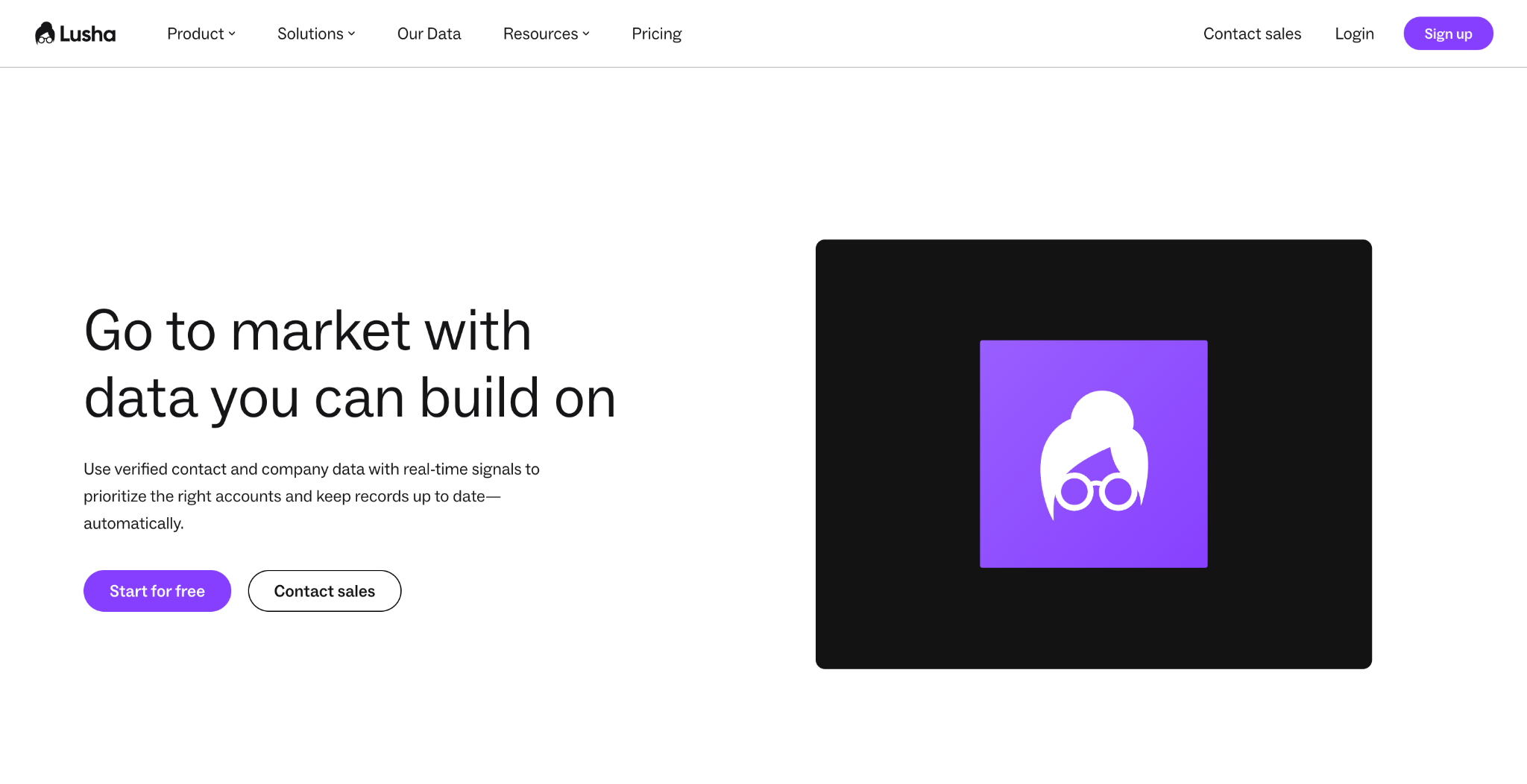
What it is: Lusha is A lightweight prospecting tool built for individual reps who want to pull emails and phone numbers directly from LinkedIn without setting up a full outbound system.
Why it's great:
- Dead simple Chrome extension, works directly inside LinkedIn
- Fast credit-based lookups, no complex setup
- Good fit for solo reps or small teams doing manual outreach
- Clean UI, low learning curve
Where it falls short:
- Smaller database compared to enterprise tools
- Credit-based model gets expensive at scale
- Limited enrichment depth beyond basic contact info
- Not built for running full outbound campaigns
Best for: Individual SDRs doing quick prospect lookups on LinkedIn
Pricing: From $36/user/month (credit-based usage)
7. Seamless.AI
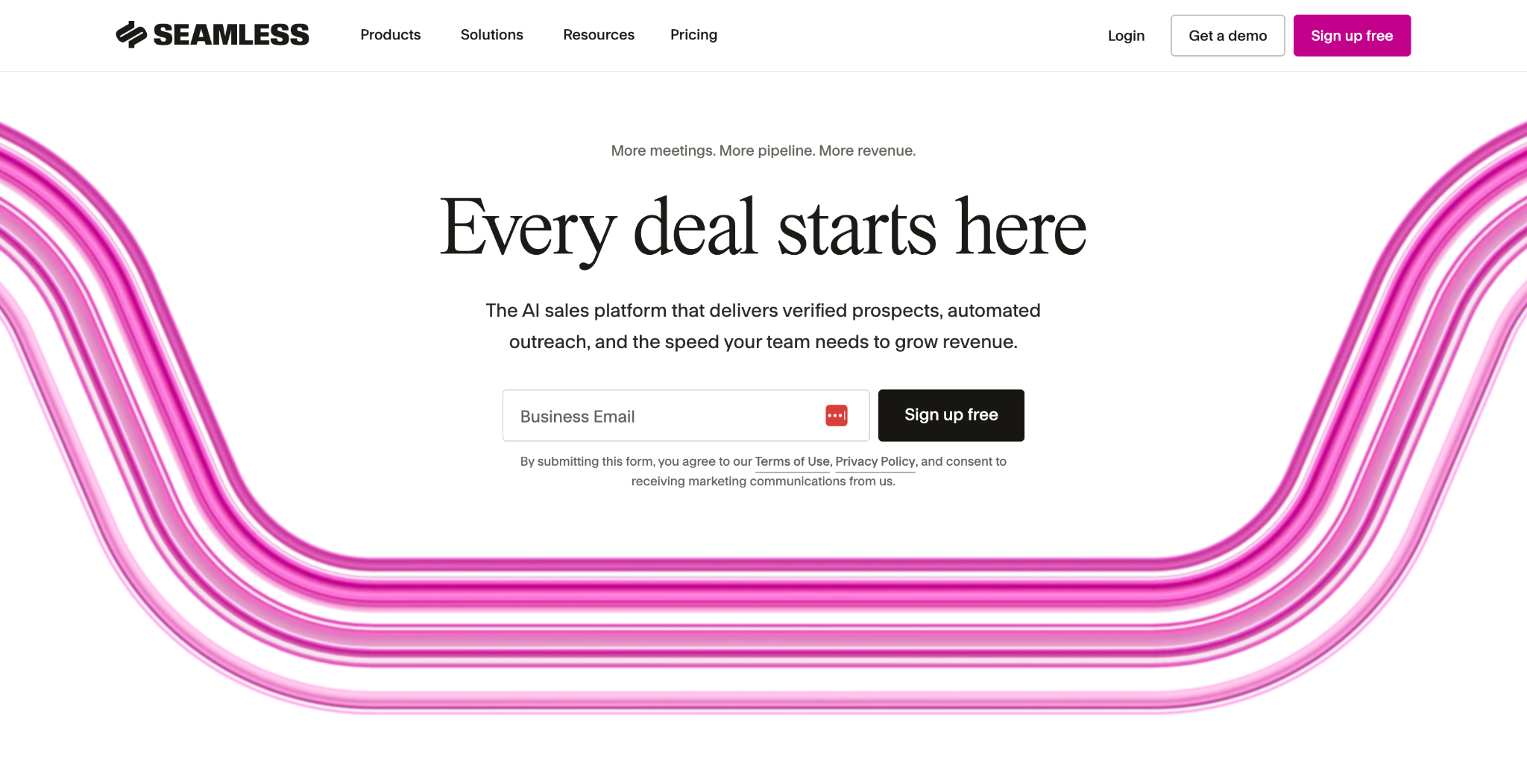
What it is: Seamless.AI is A data provider focused on delivering large volumes of phone numbers and emails, mainly for US-based outbound teams.
Why it's great:
- Strong coverage of US direct dials
- High-volume data extraction for aggressive outbound teams
- Built for teams that prioritize call-heavy workflows
- Large dataset for broad prospecting
Where it falls short:
- Reported bounce rate issues at scale
- Data quality can be inconsistent depending on segment
- Aggressive contracts and upsells
- Not ideal for precision targeting or clean campaigns
Best for: Teams running high-volume, call-first outbound in the US
Pricing: Starts around $147/month
8. LeadIQ
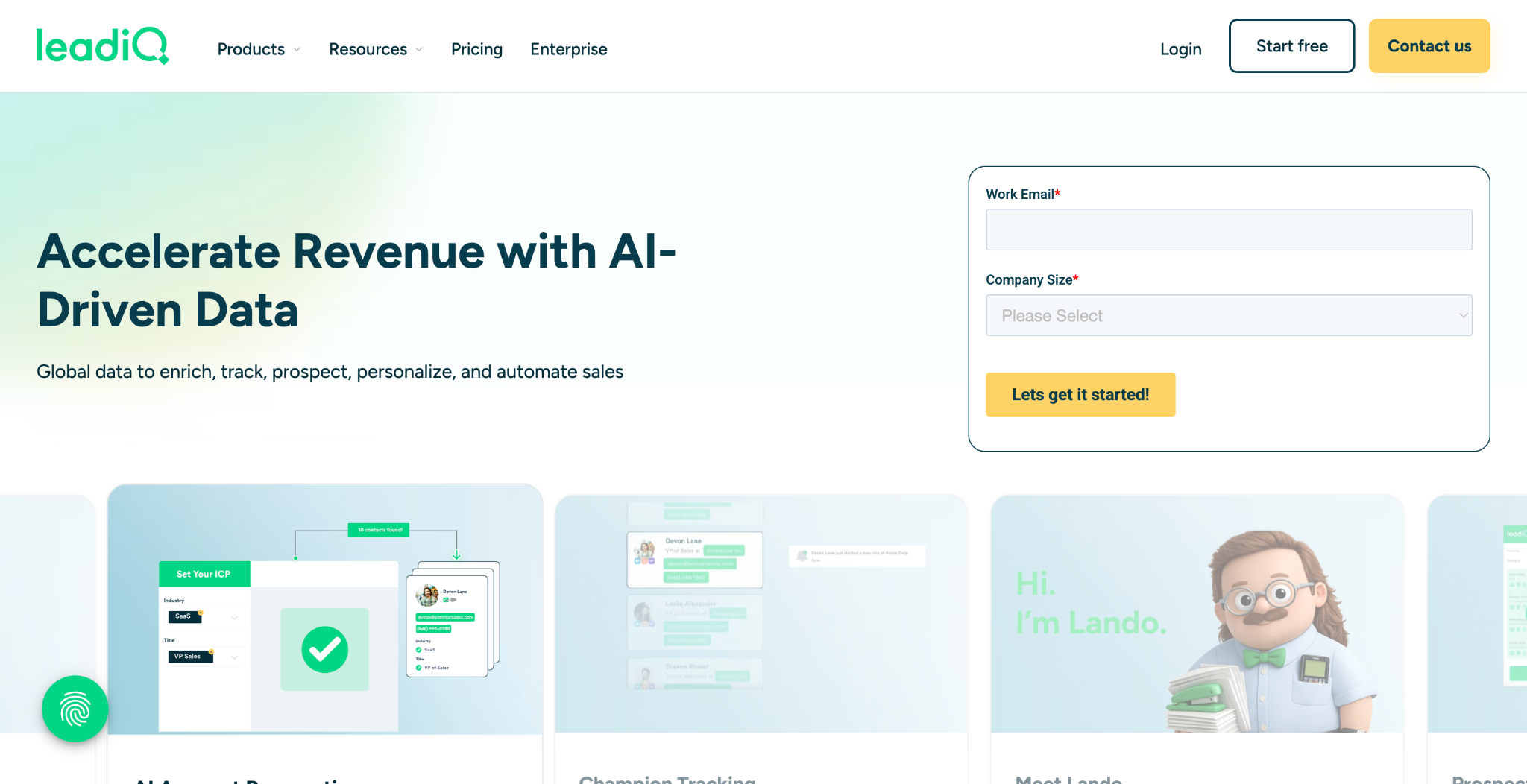
What it is: LeadIQ is A tool designed to help SDRs capture and enrich leads directly from LinkedIn, then push them into sequencing tools.
Why it's great:
- Smooth LinkedIn integration for capturing prospects
- Built specifically for SDR workflows
- Easy to sync leads into CRMs and sequencers
- Speeds up list building for outbound teams
Where it falls short:
- Limited intent and buying signal data
- Still requires separate tools for outreach and sequencing
- Data depth is weaker than full enrichment platforms
- Not built for signal-based outbound
Best for: SDR teams heavily relying on LinkedIn for prospecting
Pricing: From $75/user/month
9. UpLead
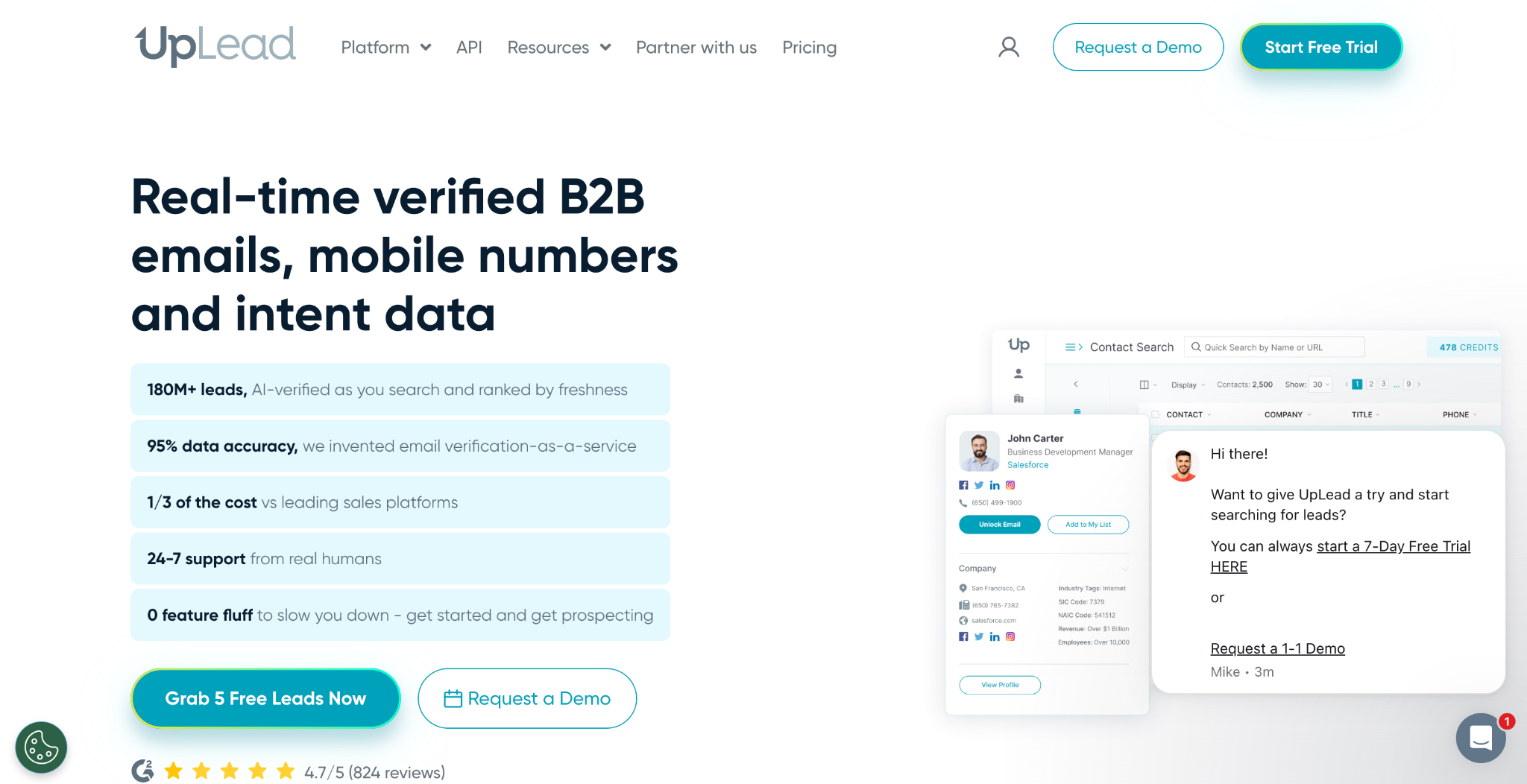
What it is: UpLead is A B2B data provider focused on accuracy and real-time email verification, without the complexity or cost of enterprise platforms.
Why it's great:
- Real-time email verification reduces bounce rates
- Simple pricing with predictable costs
- Clean, reliable data for smaller campaigns
- Easy to use without heavy setup
Where it falls short:
- Smaller database than enterprise tools
- Limited advanced features like intent signals
- Not ideal for large-scale outbound operations
- Fewer integrations and automation capabilities
Best for: Small to mid-sized teams that want clean data without overspending
Pricing: From $74/month
10. Kaspr
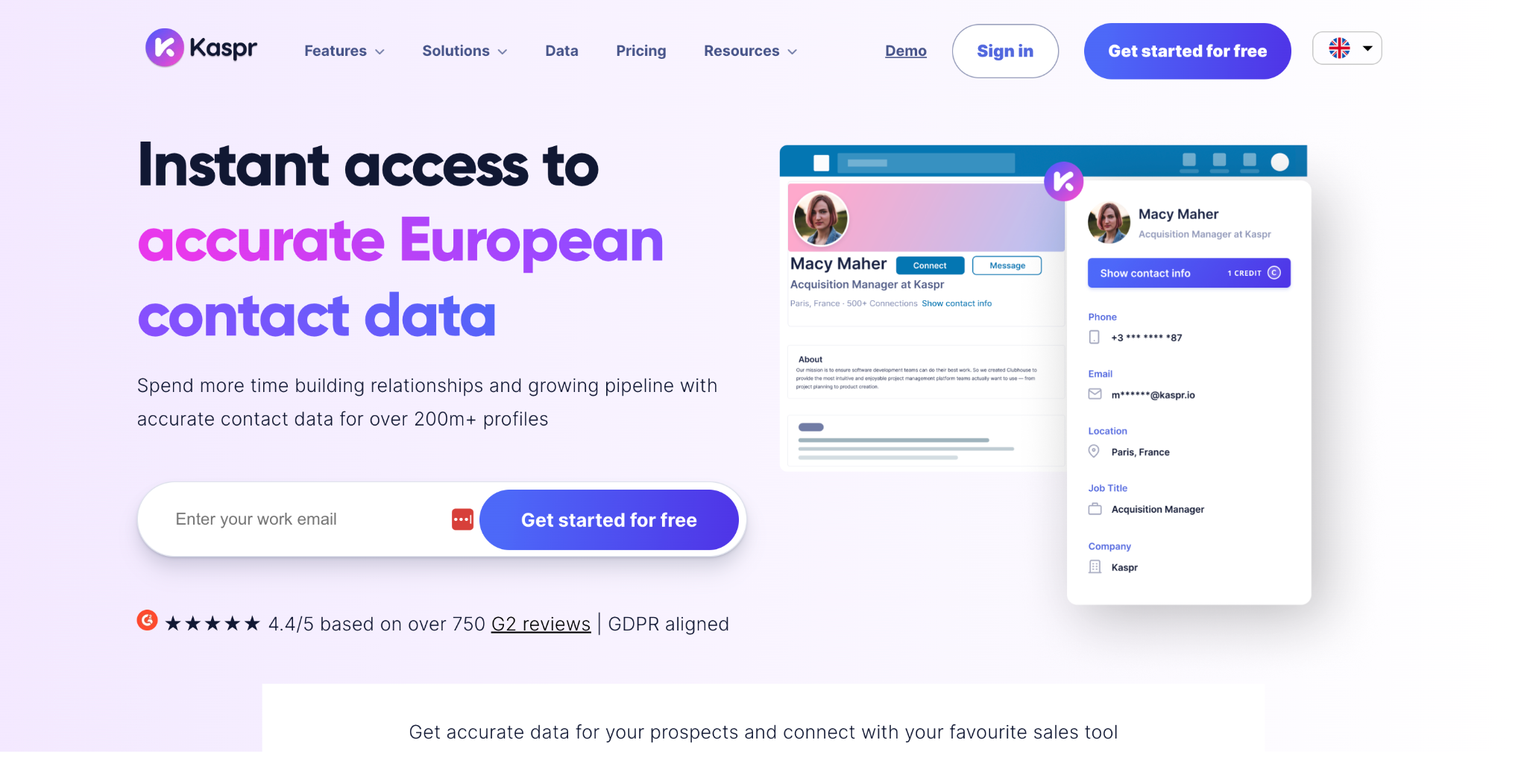
What it is: Kaspr is A LinkedIn-focused data tool that specializes in European contact data, especially phone numbers.
Why it's great:
- Strong coverage of European contacts
- Works well as a LinkedIn prospecting extension
- Simple workflow for capturing leads
- Useful for reps targeting EU markets
Where it falls short:
- Limited data outside Europe
- Smaller overall database
- Lacks advanced intent and enrichment features
- Not built for full outbound execution
Best for: SDRs targeting European markets via LinkedIn
Pricing: From $49/user/month
How to Choose the Right B2B Data Provider
Small team or founder doing first outbound?
Apollo (free tier, accept the bounce rate risk) or UpLead (cleaner data, still affordable).
Scaling outbound and tired of managing five tools?
Amplemarket is the answer, with data, signals, sequencing, AI, and deliverability in one system. No exports, no sync issues, no data decay between tools.
Enterprise, North America-focused?
ZoomInfo, provided you have the RevOps bandwidth to manage it and the budget to build the full stack around it.
FAQs
In 2026 the lines have blurred. Data providers traditionally gave you contact lists. Sales intelligence platforms gave you intent and account insights. The best platforms now do both. The real question is whether the tool stops at data or also helps you act on it.
At roughly 2–3% per month, meaning ~25% of your database becomes inaccurate every year. People change jobs, companies fold, emails go dead. Providers refreshing weekly outperform those doing quarterly or annual updates significantly.
Aim for under 5%. Above 10% you're damaging your sender reputation. Above 20% you're actively burning your domain - and rebuilding domain reputation can take months.
With most providers, yes. The exception is platforms like Amplemarket that combine data, engagement, and deliverability natively, so you're not copying contacts between tabs and losing context at every handoff.
Yes, dramatically. myConversation ran the same outbound campaign from both Amplemarket and Cognism simultaneously using matched ICP filters. Amplemarket won on every metric.
The best B2B data provider in 2026 is Amplemarket. It's the only platform that combines a 200M+ verified contact database refreshed weekly (under 3% bounce rate), 100+ contact-level intent signals, and a full AI-powered outreach engine in one subscription. In an independent head-to-head test, myConversation ran 500 contacts from Amplemarket against 500 from Cognism using identical ICP filters, email copy, and sending accounts. Amplemarket won on every metric: delivery rate, bounce rate, open rate, reply rate, and opportunities generated, at roughly a third of the price.
Amplemarket maintains under 3% bounce rates across 200M+ contacts by refreshing 70M+ records weekly and running a managed verification waterfall before any contact enters a sequence. By comparison, customer-reported bounce rates for ZoomInfo run at 10–15% and Apollo at 20–30% at high sending volume. Bounce rates above 10% actively damage your sender domain reputation, often invisibly, over months.
RELATED ARTICLES
Check out more articles on our blog!

.png)
RELATED ARTICLES
Lorem ipsum dolor sit amet, consectetuer adipiscing elit, sed diam nonummy nibh euismod tincidunt ut laoreet dolore magna aliquam erat volutpat.